
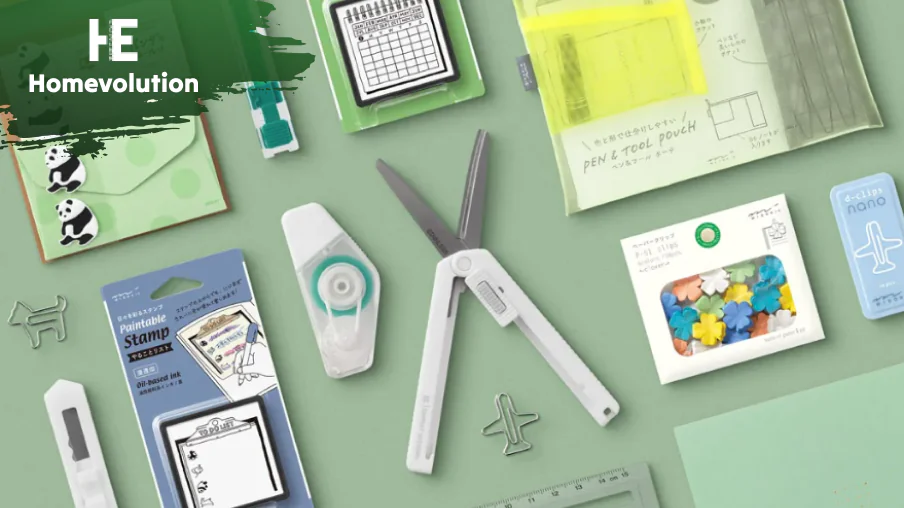
Stationery is a steady-selling category. It works for retail stores, online shops, schools, and corporate buyers. The demand stays consistent all year, with clear peaks during back-to-school seasons.
But buying cheap stationery in bulk is not just about finding the lowest price. If quality is unstable or packaging fails, your costs go up fast. Returns increase. Customer trust drops.
This guide shows you where to buy cheap stationery in bulk, what to watch for, and how to keep both cost and quality under control.
1. Online Platforms: The Fastest Way to Start
Online sourcing platforms are often the first step for buyers. They are easy to access and give you a quick overview of prices, product ranges, and supplier options. If you are testing new products or comparing costs, these platforms can help you move quickly.
Alibaba
Alibaba works best for medium to large orders. You can find a wide range of suppliers offering notebooks, pens, office supplies, and custom stationery. Many of them support OEM services, which makes it easier to build your own brand.
Price should not be your only focus. A lower quote often means lower material quality or limited quality control. Before placing an order, check the supplier’s verification status, export experience, and transaction history. These details give you a clearer picture of how reliable the supplier is.
The key is not price alone. Check:
- Supplier verification status
- Export experience
- Product reviews or transaction history
A low quote often means basic materials or minimal quality control.
Made-in-China
Made-in-China focuses more on manufacturers than trading companies. This makes it a better option if you want stable production and more control over product specifications.
It is especially useful when you are planning long-term sourcing. You are more likely to get consistent product quality and factory-level pricing. Over time, this helps reduce risk and improve supply stability.
It is useful for:
- Long-term supply
- Consistent product quality
- Factory-level pricing
Global Sources
Global Sources is smaller than other platforms, but it often targets more experienced international buyers. Suppliers here usually offer better packaging, clearer communication, and stronger branding support.
Prices may not be the lowest, but the overall quality and reliability are often higher. This makes it a good choice if your focus is on brand positioning rather than just cost.
| Platform | Best For | Price Level | MOQ | Quality |
| Alibaba | Variety & OEM | Low–Mid | Low–Mid | Medium |
| Made-in-China | Factory sourcing | Mid | Mid–High | Stable |
| Global Sources | Branding buyers | Mid–High | Mid | High |
2. Wholesale Markets: The Real Price Advantage
Wholesale markets give you direct access to suppliers, which is why they offer the lowest prices in most cases. Unlike online platforms, where prices often include marketing and platform fees, market suppliers compete face-to-face. This creates more room for negotiation.
Another advantage is product variety. You can compare dozens of suppliers in a single day, check materials in person, and make faster decisions. For buyers who want mixed products or small batches, wholesale markets are often the most flexible option.
2.1 Yiwu International Trade City
The Yiwu International Trade City is the largest wholesale market in the world. It has entire sections dedicated to stationery.
You can find:
- Pens, markers, and writing tools
- Notebooks and paper products
- School supplies and kits
- Creative and gift stationery
Many suppliers here offer very low MOQs compared to factories. This makes it ideal for small and medium buyers. The main challenge is consistency. Products that look similar can vary in material and durability. Careful selection and comparison are necessary before placing orders.
2.2 Guangzhou Wholesale Markets
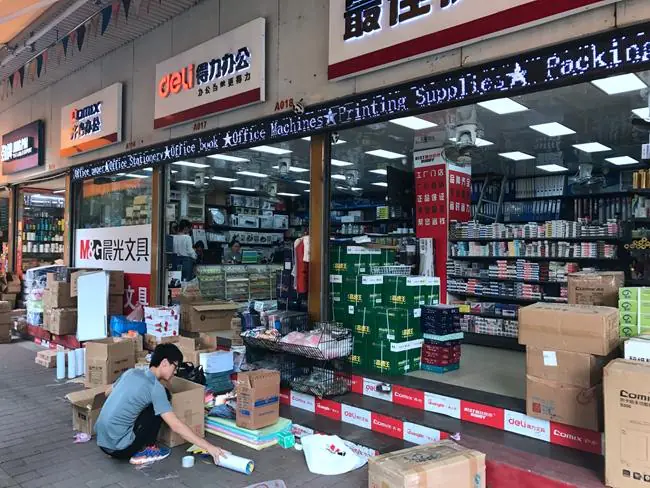
Markets in Guangzhou are more specialized. You can find better quality office stationery and more export-ready products.
These markets are a good choice if you care about:
- Packaging quality
- Brand positioning
- Stable supply
These markets are a good choice if you need better packaging, more consistent production, and suppliers with export experience. Prices may be higher, but the overall reliability is often stronger.
3. Buying Direct from Manufacturers
Working directly with factories offers the best long-term value for wholesale buyers. When you place larger orders, the unit cost drops significantly, which improves your profit margins. You also gain greater control over product specifications, materials, and packaging. This is especially important if you want your stationery to stand out with private labels or custom designs.
Why You Might Choose Factories
This option works well if you:
- Want private label products
Factories can print your logo, customize packaging, or create exclusive product designs. This is harder to achieve with trading companies or market stalls.
- Need consistent quality across batches
Working directly with a manufacturer allows you to set clear quality standards. You can request samples before production, perform pre-shipment inspections, and track quality over time.
- Plan to scale your business
Factories are prepared to handle large or recurring orders. Once you establish a relationship, they often prioritize your production over new or small buyers.
Challenges to Consider
- Higher Minimum Order Quantities (MOQ)
Factories usually expect bigger orders than wholesale markets. Small buyers may need to pool orders with other products or negotiate gradually increasing MOQs.
- Communication and logistics
Factory contacts may be slower or less flexible than trading companies. Without local support or a sourcing agent, misunderstandings can occur regarding materials, colors, or delivery times.
- Payment and contract terms
Direct factory deals often require advanced payments or letters of credit. Planning your cash flow is essential to avoid delays or penalties.
Tips for Working with Factories
Start with samples
Verify quality before committing to a large order. Test the materials, printing, and packaging.
Document every specification
Include color codes, sizes, paper weight, and ink type in your order sheet. Factories respond better to precise instructions.
Build a long-term relationship
Consistent orders and clear communication often result in better pricing, faster production, and priority scheduling.
Use a sourcing agent if needed
A local partner can inspect production, handle shipments, and bridge language barriers, saving you time and avoiding costly mistakes.
Working directly with manufacturers can reduce costs, improve quality, and allow for customization, but it requires careful planning and active management. When done right, it sets the foundation for a scalable, reliable stationery supply chain.
4. Buying Direct from Manufacturers
Working directly with factories is often the smartest choice for long-term sourcing. Unlike online platforms or wholesale markets, factories give you more control over materials, production quality, and customization options. Once your order volume grows, the unit cost usually drops, which improves your overall margins.
This approach works best for businesses that want private label products, need consistent quality across batches, or plan to scale up operations. You can specify packaging, print your logo, and even adjust product specifications to match your brand identity.
However, working with factories comes with considerations. Most factories require higher minimum order quantities (MOQs), which can be challenging for smaller buyers. Communication may also be slower if you do not have local support, so planning and coordination become critical.
To make this clearer, here’s a simple comparison of the benefits and considerations of buying directly from manufacturers:
| Factor | Benefits | Things to Consider |
| Unit Cost | Lower per item as volume increases | Higher upfront investment due to MOQ |
| Customization | Full control over packaging, logo, and design | Design changes may require more lead time |
| Quality Control | Consistent quality across batches | Need inspections or third-party QC |
| Supply Stability | Direct relationship reduces dependency on middlemen | Communication may be slower without local support |
| Scaling Potential | Easier to scale when business grows | Requires careful planning and forecasting |
By balancing these factors, buyers can secure high-quality stationery products at competitive prices while keeping long-term growth in mind. Proper planning, clear communication, and quality checks ensure that working with factories becomes a reliable and profitable sourcing strategy.
5. Comparing Your Options
Each sourcing channel has its own advantages. The best choice depends on your business stage, order size, and long-term goals. Many experienced buyers use a mix of all three channels to balance cost, quality, and convenience.
| Sourcing Channel | Key Benefits | Best For | Things to Watch For |
| Online Platforms | Quick access to thousands of suppliers, easy product search | Testing new products, small to medium orders | Quality varies, shipping costs may be higher |
| Wholesale Markets | Lowest prices, wide variety, flexible MOQs | Mixed orders, buyers on tight budgets | Requires physical visits or trusted agents |
| Factories | Control over production, stable quality, custom options | Long-term supply, private label, scaling business | Usually higher MOQs, communication can be slower |
Online platforms are ideal for buyers who want speed and flexibility. You can compare multiple suppliers without traveling, and it’s easy to test new products before committing to bulk orders. However, lower cost does not always mean better value — check reviews and verification carefully.
Wholesale markets offer the advantage of seeing products in person and negotiating on-site. Prices are often the lowest, especially for mixed or small batch orders. The trade-off is that markets can be overwhelming for new buyers, and quality may vary widely between stalls.
Working directly with factories gives you the most control over specifications, packaging, and long-term supply stability. This is essential if you plan to scale your business or launch a private label stationery line. Keep in mind that factories typically require higher minimum orders, and clear communication is necessary to avoid mistakes.
By understanding the strengths and limitations of each channel, you can choose the right mix that fits your sourcing strategy. Many successful buyers combine online platforms for testing, markets for immediate stock, and factories for long-term production.
6. Hidden Costs You Should Not Ignore
Buying cheap stationery in bulk is tempting, but the lowest unit price rarely tells the whole story. Many buyers focus solely on price and overlook the extra costs that can quietly eat into profit margins. Understanding these hidden costs can save you time, money, and frustration.
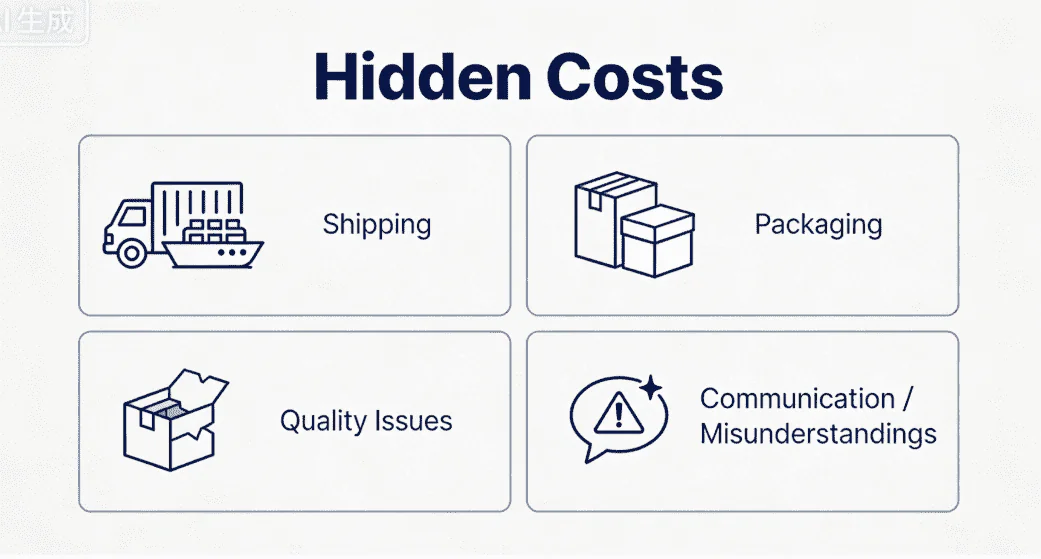
1. Shipping and Freight Fees
Shipping is often the largest hidden cost in bulk purchases. Low-cost products with large volume may seem cheap per unit, but transportation can add significantly to your total spend. For example, pens or notebooks are lightweight individually, but ordering thousands of units can quickly fill a container or exceed courier weight limits. Oversized or irregular packaging can further increase fees.
Tips to reduce shipping costs:
- Consolidate shipments from multiple suppliers into one container.
- Choose efficient packaging that reduces volume without compromising protection.
- Compare shipping methods (air, sea, express) to find the right balance of cost and speed.
2. Quality Issues and Returns
Cheap products often come with inconsistent quality. Even a 5% defect rate may seem small, but in a 5,000-unit order, that’s 250 items that cannot be sold. Returns, replacements, and customer complaints increase your hidden costs and harm your reputation.
How to mitigate quality risk:
- Request samples before committing to a large order.
- Check material specifications and compare with previous batches.
- Work with suppliers that offer inspection services or third-party quality checks.
- Keep a small buffer stock to replace defective items quickly without disrupting sales.
3. Packaging Costs and Damage Risk
Packaging affects both cost and product condition. Poor packaging may save a few cents per unit, but it can result in damaged goods during transit. Customized packaging may have higher upfront costs, but it protects products better and also improves customer perception.
Considerations for packaging:
- Use sturdy boxes, dividers, or cushioning materials for fragile stationery.
- Optimize package size to reduce shipping fees.
- Consider branded or private-label packaging if selling directly to consumers, which adds value and reduces returns.
4. Communication and Specification Errors
Buying from overseas suppliers introduces potential communication gaps. Misunderstandings about color shades, paper thickness, ink quality, or logo placement can lead to reorders, production delays, or extra costs for corrections. Even a small misalignment with supplier expectations can compound into significant delays and financial losses.
Ways to avoid specification errors:
- Provide clear, written product specifications with images or samples.
- Confirm all details before production begins.
- Maintain consistent communication through email, chat, or local agents.
- Use a sourcing agent or local representative if language or time zone barriers exist.
When You Need a Sourcing Partner
Buying from China can save cost, but it also requires time and experience. If you are dealing with multiple suppliers or visiting markets is not practical, a sourcing partner can help.
A local team can:
- Compare suppliers quickly
- Check product quality before shipment
- Consolidate goods from different vendors
- Handle shipping and export documentation
This reduces risk and keeps your supply chain stable as your business grows.
Final Thoughts
Buying cheap stationery in bulk is simple in theory, but maintaining quality and consistency is the real challenge. Online platforms give speed, wholesale markets offer variety and low prices, and factories ensure long-term stability.
The best results come from balancing cost, quality, and reliability. Start small, test samples, and plan ahead to avoid costly mistakes.
If you want to save time and reduce risk, working with a China sourcing agent can simplify the process. They can verify suppliers, inspect goods, and handle shipping — so you focus on growing your business while keeping costs under control.