
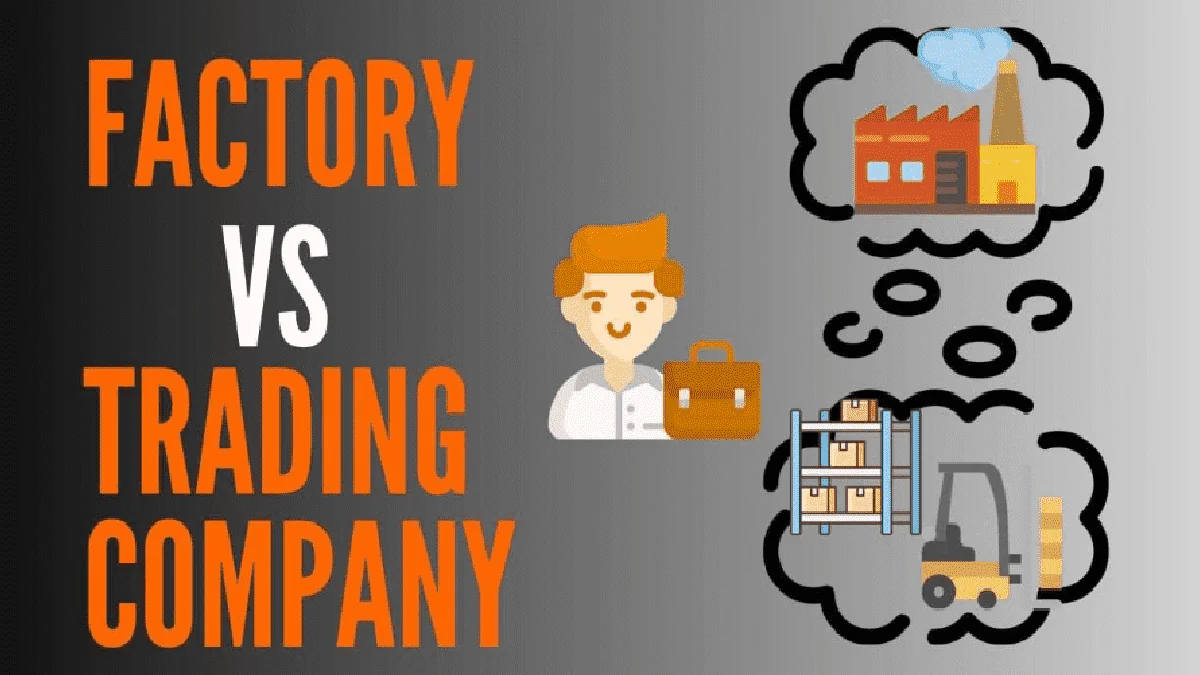
Someone hands you a business card. Their booth looks professional. Their samples are decent. And they tell you — with complete confidence — that they have been a manufacturer since 2003.
Maybe they have. Maybe they haven’t.
At the Canton Fair, almost every exhibitor claims to be a factory. That is not an accident — it is an industry-wide pattern, and understanding it is one of the most practical skills any buyer can develop. Experienced importers estimate that 30%–40% of Canton Fair exhibitors are trading companies or hybrid operations. The fair does not publish a breakdown, so the verification falls on you.
This article gives you three layers of tools to work with: what to look for before you say a word, which questions to ask in the first three minutes, and how to verify anything you’re unsure about after you leave the booth. By the time you finish reading, you will have a system — not just a hunch.
Why It Matters Whether You’re Talking to a Factory or a Trading Company
The short answer is money and control. Trading companies sit between you and the factory. They buy from the manufacturer and resell to you, adding their margin in between. That margin typically runs 10%–30% above the factory price, according to sourcing industry estimates. On a $50,000 order, that is $5,000–$15,000 that stays in the supply chain instead of your pocket.
Price is only part of it. Working directly with a factory means you can discuss production specs, MOQ adjustments, and OEM customization with the people who actually make the product. Changes get confirmed faster. Quality issues get addressed at the source. When something goes wrong — and in manufacturing, something always eventually goes wrong — you are talking to the decision-maker, not a middleman relaying messages.
With a trading company, every specification change goes back to the factory first. That adds days or weeks to your timeline. It also means information gets filtered along the way — details that matter to you may not make it through intact.
- Sourcing industry estimates put trading company margins at 10%–30% above factory prices. On a $50,000 order, that gap is $5,000–$15,000 — enough to fund a full quality inspection program or reduce your unit cost significantly.
- Working directly with a factory lets you discuss production specs, MOQ changes, and OEM customization with the people who make decisions. With a trading company, every change goes through an extra layer — which adds time and filters information.
- Pro tip: Knowing who you’re talking to doesn’t mean walking away from every trading company. It means you negotiate differently. Factory pricing has room for cost-structure discussions. Trading company pricing works differently. Both can be good partners — but only if you know which one you’re dealing with from the start.
Why Almost Every Exhibitor at Canton Fair Claims to Be a Factory
This is the part most buyer guides skip. Why does it happen so consistently?
The economics are simple. If a trading company tells you upfront that they don’t manufacture, there is a good chance you move on to the next booth. So most don’t say it. They present as manufacturers, use factory imagery in their materials, and describe their operations in production terms. It is not always calculated deception — some trading companies have deep, exclusive partnerships with factories and genuinely consider themselves close enough to production to make the claim. But the result is the same: you don’t know what you’re actually dealing with.
The challenge got harder in recent years. Some trading companies have invested in showrooms that look like factory displays, complete with equipment photographs and production certificates that belong to partner factories. As one sourcing professional put it, experienced buyers learn to spot the red flags within minutes — but it takes time to build that eye.
- A buyer sourcing kitchenware at Canton Fair 2023 shortlisted 12 exhibitors who all presented as manufacturers. After post-fair verification, 5 turned out to be trading companies — including one that had been showing factory photos that were not theirs. The buyer caught it only after requesting a factory visit that the supplier kept postponing.
- This is not always deliberate fraud. Some trading companies have exclusive or semi-exclusive partnerships with factories and genuinely believe they qualify as manufacturers. The line blurs. That is exactly why self-reporting is not a reliable method — you need independent verification.
- Experienced importers estimate that 30%–40% of Canton Fair exhibitors are trading companies or hybrid operations, based on buyer surveys and sourcing agent assessments. The official fair does not publish this breakdown, which means the verification work falls entirely on the buyer.
What to Look for at the Booth — Before You Say a Word
You can learn a lot in the first 30 seconds. Before you introduce yourself or pick up a sample, take a quick scan of the booth. Three things tell you more than most questions will.
The first is product range. A real factory focuses on one production process. Their product range is narrow and deep — variations on a theme, not a catalogue of unrelated categories. A booth displaying sofas, LED lights, kitchen tools, and garden furniture in the same space is almost certainly a trading company. Manufacturers know their lane. They don’t pivot mid-conversation from outdoor furniture to personal care.
The second is what the booth is designed to show. Factories tend to display production evidence — certification walls, material spec sheets, equipment photographs, process diagrams. These are things manufacturers put up because they are proud of them and they validate the booth’s credibility. Trading companies invest in polished product displays instead. Beautiful, professional, well-lit — but thin on manufacturing detail.
The third is the address. Check the company brochure or the booth display board for a registered address. Factory addresses are in industrial zones or manufacturing parks — you will see terms like “Industrial District,” “Economic Development Zone,” or a specific township outside the city centre. A major-city office building address is a trading company signal.
- A booth displaying sofas, LED lights, kitchen tools, and garden furniture in the same space is almost certainly a trading company. Real factories focus on one production process — their product range is narrow and deep, not wide and mixed. Variety is convenient; it is also a tell.
- Pro tip: Look for a certification wall, material spec sheets, or production process diagrams on the booth display. These are things factories put up because they’re proud of them. Trading companies invest in polished product displays instead — beautiful, but thin on manufacturing detail.
- Check the company brochure for the registered address. Factory addresses sit in industrial zones or manufacturing parks — look for terms like “Industrial District” or “Economic Development Zone.” An address in a major city office building is a trading company tell. This one check takes ten seconds and costs nothing.
Five Questions to Ask in the First Three Minutes
Once you engage, you have a short window before the conversation goes into standard sales mode. These five questions cut through that quickly. You are not trying to catch anyone out — you are trying to gather real information efficiently. Ask them in a friendly, direct tone. Listen for specificity, not polish.
1. Where is your factory located, and can I visit this week?
A manufacturer will name the city and industrial area without hesitation. Most will welcome a visit — some will invite you before you finish asking. A trading company will say the factory is “a bit far” or “currently in full production” and rarely commit to a specific date. The willingness to be visited is one of the clearest factory signals there is.
2. If I need to adjust the packaging design, how long does it take to confirm the cost?
Factory representatives can give you a rough answer on the spot. They know their production process. Trading companies need to go back to their supplier first — which means 2–3 extra days before you get a number. Watch for hesitation on this one. It reveals the gap between the person in front of you and the actual production decision-maker.
3. What is your standard MOQ for this product, and what happens if I need 20% less?
Factories set their own MOQs based on production economics. They know the number and can usually explain why it exists. Trading companies often quote MOQs they’ve received from the factory without full understanding — and struggle to explain the reasoning behind them.
4. Do you have an export license in your company’s name?
Manufacturers with a solid export history hold their own export license. Some trading companies operate under a third-party freight forwarder’s license, which means an extra layer in your supply chain. This question does not always produce a straight answer, but the response tells you something either way.
5. Can you show me your production capacity — monthly output for this product?
A factory rep will know this number. It is a basic operational figure that anyone involved in production tracks weekly. A trading company representative often cannot answer it without checking, because the data belongs to the factory they source from, not to them.
- “Where is your factory located, and can I visit this week?” — A manufacturer will name the city and industrial zone without hesitation and will usually welcome a visit. A trading company will say the factory is “a bit far” or “currently at full capacity” — and rarely commit to a date. Willingness to be visited is one of the clearest factory signals you’ll encounter.
- “If I need to adjust the packaging design, how long does it take to confirm the cost?” — Factory reps give you a rough answer on the spot. Trading companies need to go back to their supplier first, adding 2–3 days to the process. Watch for hesitation — it reveals the distance between the person in front of you and the actual production decision-maker.
- Pro tip: Write every answer on the back of the exhibitor’s business card the moment they say it. You will speak to 30–50 booths over two days. Without notes, every conversation blurs by the end of day one — and you will not remember which supplier had the faster lead time or the better MOQ when you sit down to compare on day three.
Red Flags That Tell You Something Is Off
Beyond the specific questions, there are patterns that experienced sourcing professionals learn to read quickly. None of these alone is definitive — but two or three together usually tell a clear story.
Frequent “let me check with our team” responses to basic production questions are the most common signal. Things like standard MOQ, raw material lead time, or machine capacity are figures any factory representative should know cold. If the person in front of you needs to check before answering, the production information does not live with them — it lives somewhere else.
Watch for two different addresses on the same materials. A business card with a Guangzhou city address and a brochure with a “factory” address in Dongguan is worth questioning. When one buyer asked to visit the Dongguan facility the following day, the answer was a polite but firm no. That was the moment to move on.
Product range that spans unrelated categories is another strong signal. A catalogue covering furniture, personal care, electronics, and outdoor equipment in the same company does not reflect manufacturing. Manufacturers know their lane and stay in it. The ability to pivot seamlessly between unrelated product categories is a trading company trait.
- A first-time buyer visited a booth with two different addresses on their materials — one in Guangzhou for the company office, one listed as a factory in Dongguan. When asked about visiting the Dongguan site the next day, the answer was a polite but firm no. Two addresses, no access. That is the moment to walk.
- Frequent “let me check with our team” responses to basic production questions — MOQ, raw material lead time, monthly capacity — signal that the person in front of you is a sales rep with no direct connection to the factory floor. Factory staff know these numbers because they live with them daily.
- A product catalogue covering five or more unrelated categories — furniture, personal care, electronics, outdoor equipment, and gift items in the same brochure — is one of the clearest trading company signals. Manufacturers know their production process. They don’t manufacture garden chairs and face serums on the same line.
How to Verify After You Leave the Booth — Using Your Phone
The booth visit gives you a strong impression. But impressions can be managed. Before you move a supplier from your shortlist to a serious prospect, spend 60 seconds on a verification check that no amount of booth polish can fake.
Ask the exhibitor for two things: their company’s full Chinese name (中文名称) and their 18-digit Unified Social Credit Code (统一社会信用代码). Both should be on their business license, which any legitimate exhibitor will share without hesitation. Then go to Qichacha and search for the company.
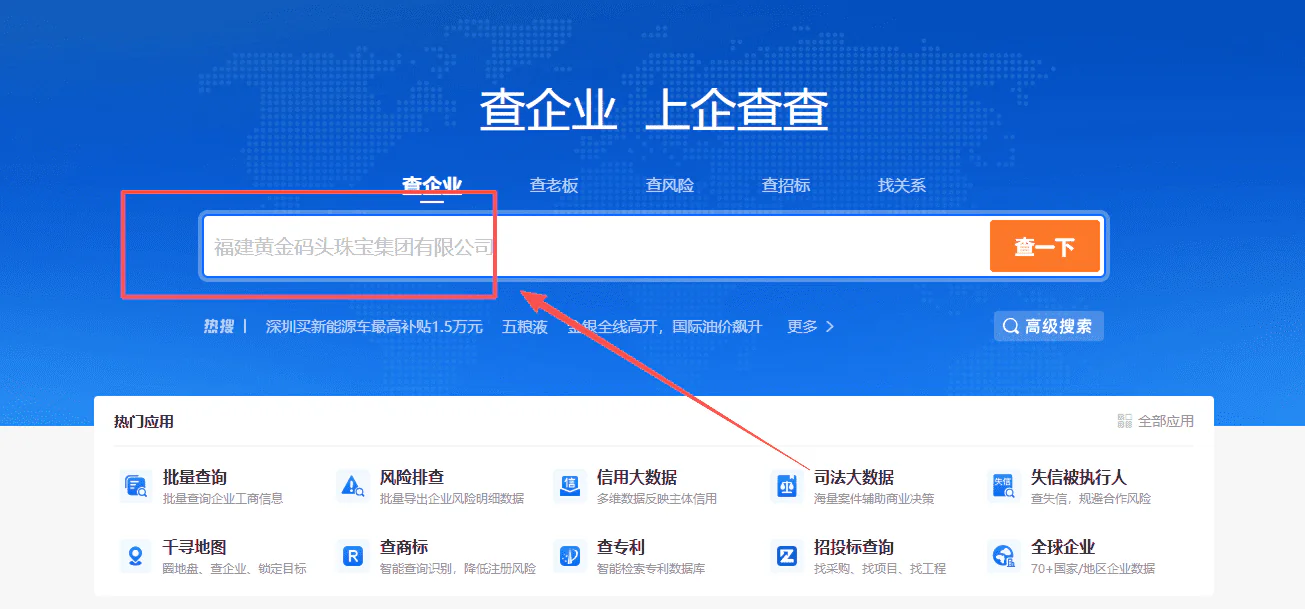
Look at the “Business Scope” field. If it lists manufacturing or production activities specific to the product category — furniture production, plastic goods manufacturing, electronic equipment assembly — you are looking at a factory registration. If it lists trade, wholesale, import/export, or distribution, the company is registered as a trading entity, whatever they told you at the booth.
You do not need to read Chinese to do this. Screenshot the business scope section and run it through Google Translate. It takes under a minute and gives you a reliable legal read on what the company is registered to do. Cross-reference the registered address shown in Qichacha against what they told you — if the addresses match and fall in an industrial zone, that is a strong factory signal.
- Ask the exhibitor for their company’s full Chinese name and 18-digit Unified Social Credit Code. Search both on Qichacha at qichacha.com. Find the “Business Scope” field: manufacturing and production activities indicate a factory; trade, wholesale, and import/export activities indicate a trading company. This check takes 60 seconds and is based on official government registration data.
- Pro tip: You don’t need to read Chinese to use Qichacha. Screenshot the business scope section and run it through Google Translate — it takes under a minute. Any legitimate exhibitor will share their company name and credit code without hesitation. Reluctance to provide either is a signal in itself.
- A European retailer wired a deposit to a Canton Fair contact who had presented confidently as a factory. Post-payment verification showed the company was registered as a trading agent with no manufacturing scope in their business license — and no actual production facility. The goods arrived eight weeks late and failed quality inspection. A 60-second Qichacha check before payment would have flagged the mismatch immediately.
| Criteria | Factory | Trading Company |
|---|---|---|
| Primary Function | Manufactures products in-house | Buys from factories and resells |
| Price Structure | Lower base price, fewer middle margins | Higher price due to added margin |
| MOQ Flexibility | Usually higher MOQ | Often more flexible MOQ |
| Product Customization | Strong OEM / ODM capability | Limited technical control |
| Production Control | Direct control over quality & timeline | Relies on third-party factories |
| Communication Speed | Technical questions may take time | Faster commercial response |
| Product Range | Usually focused on one category | Wide variety of products |
| Risk Level | More stable for long-term partnership | Risk depends on their supplier network |
| After-Sales Support | Can solve production issues directly | Needs coordin |
When a Trading Company Is Actually the Right Choice
Most buyer guides stop at “avoid trading companies.” That advice is too simple, and it misses real situations where trading companies provide genuine value.
If you are sourcing across five product categories from different factories, a trading company can consolidate everything into one shipment and handle the cross-supplier coordination. For buyers who need mixed-category orders, that operational capability has real value. The time saved on logistics and communication often offsets the price premium — especially when you are still building your supplier network.
Trading companies also tend to have more experienced export teams than small or mid-size factories. They handle customs paperwork, labeling compliance, and international shipping documentation regularly. For buyers placing their first few orders from China, that experience can prevent expensive errors.
The right question is not “factory or trading company?” as if one is always superior. The right question is: do I know which one I am dealing with, and am I negotiating accordingly? A trading company that is transparent about what it is can be a very good partner — particularly for smaller orders or buyers who are still learning the market.
- If your order covers five product categories from different factories, a trading company can consolidate everything into one shipment and manage the coordination. For mixed-category buyers, that service has real value — and the time saved on logistics often offsets the price premium.
- Trading companies typically have more experienced export teams than small or mid-size factories. They handle customs paperwork, labeling compliance, and shipping documentation daily. For buyers new to importing from China, that operational fluency can prevent costly first-order mistakes.
- According to sourcing industry data, buyers placing orders under $10,000 USD often receive better service and more flexibility from trading companies than from factories, which tend to prioritize larger, repeat clients. Knowing your order size helps you decide which type of supplier actually fits your business at this stage.
How a Sourcing Agent Can Do This Verification for You
If you are attending the fair for the first time, or sourcing in a category you are not yet deeply familiar with, the verification process described above takes real time and experience to execute well. A sourcing agent with a China-based team removes much of that burden.
The key is working with an agent who does the verification before the fair opens — not just on the floor. Home Evolution pre-screens exhibitors by cross-checking company registration, verifying factory addresses against industrial zone databases, and confirming manufacturing scope through official Chinese business records. By the time you walk into a meeting, the basic verification is already done.
This matters most when your time in Guangzhou is limited. Most buyers have 3–4 days at the fair. Spending half of day one at the wrong booths — exhibitors who are not what they claimed — is a cost you feel for the rest of the trip.
- Home Evolution pre-screens exhibitors before the fair opens — cross-checking company registration, verifying factory addresses, and confirming manufacturing scope through official Chinese databases. By the time you walk into a meeting, the basic verification is already complete.
- A buyer sourcing storage and organization products arrived at Canton Fair with a list of 20 exhibitors found through online research. Home Evolution pre-verified the full list and identified 7 as trading companies misrepresenting themselves as manufacturers. We replaced them with 6 verified factories before the buyer landed — saving two full days of on-floor time and two wasted deposit conversations.
- Pro tip: If this is your first Canton Fair, book a pre-fair consultation with a sourcing agent before you finalize your exhibitor shortlist. One hour of preparation can save you from spending half your trip at the wrong booths — and stop you from shortlisting suppliers who cannot actually deliver what they showed you.
The Bottom Line
You do not need to avoid trading companies. You need to know who you are dealing with — so you can negotiate accordingly, set the right expectations, and build a supply chain that does not surprise you six weeks after the fair ends.
The system is straightforward: scan the booth before you speak, ask five direct questions in the first three minutes, and verify anything you are unsure about with a 60-second Qichacha check before the supplier moves to your shortlist. These three steps take less than 10 minutes per exhibitor. Over two days at the fair, that is the difference between a shortlist you can trust and one built on self-reported claims.If you want help doing this verification before you arrive — or if you cannot attend the fair at all this year — get in touch with the Home Evolution team. We have been sourcing from China since 1997, and we attend every Canton Fair session. We will tell you exactly who you are dealing with before you make any commitments.