
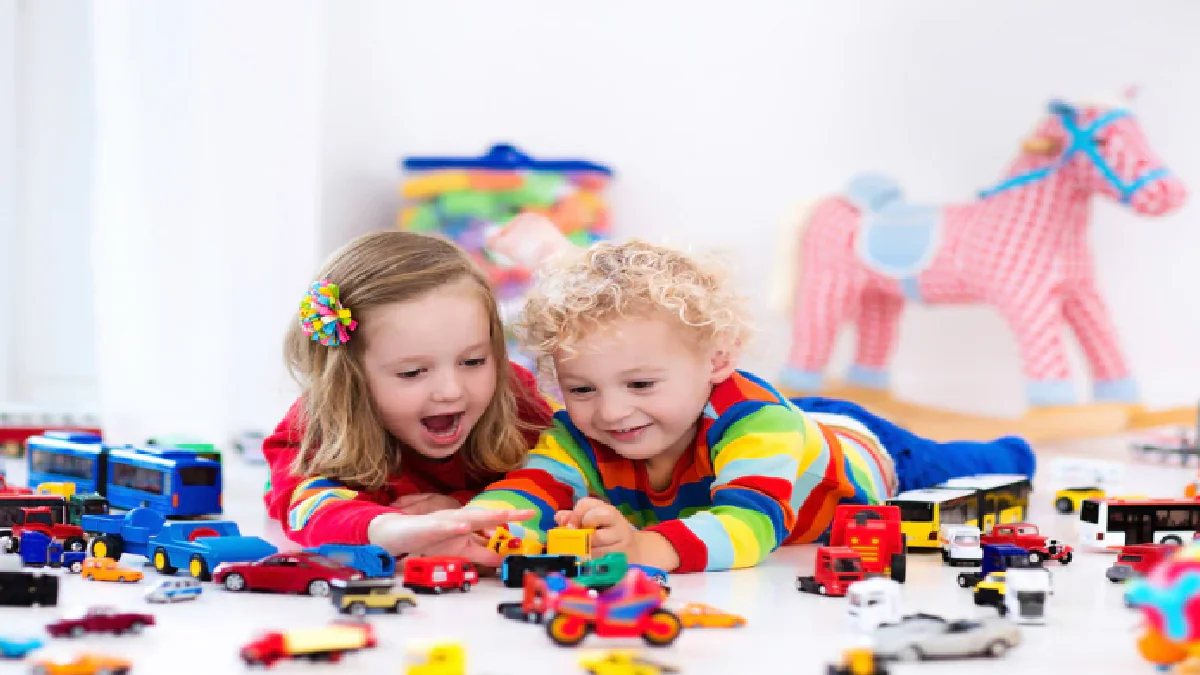
When people buy toys from famous brands, they often focus on the brand name, the design, and the packaging. Very few buyers stop to ask a more important question: Where are these toys actually made?
Behind every global toy brand is a complex manufacturing network. Production is rarely limited to one country. Instead, it is spread across multiple regions based on cost, supply chain strength, technical capability, and logistics efficiency. Over the past three decades, one country has played a central role in this system — China.
From building blocks and dolls to licensed character toys and electronic products, China has been a core production base for many well-known toy brands. Even as some companies diversify into Southeast Asia or other regions, China remains deeply embedded in the global toy supply chain.
This article explores where famous toy brands manufacture their products. More importantly, it explains why China continues to hold such a strong position in the toy industry. For importers, wholesalers, and private label brands, understanding this global manufacturing landscape is not just interesting — it is essential for making smarter sourcing decisions.
1. A Global Manufacturing Map of Leading Toy Brands
1.1 LEGO – Denmark Brand, Global Manufacturing Network
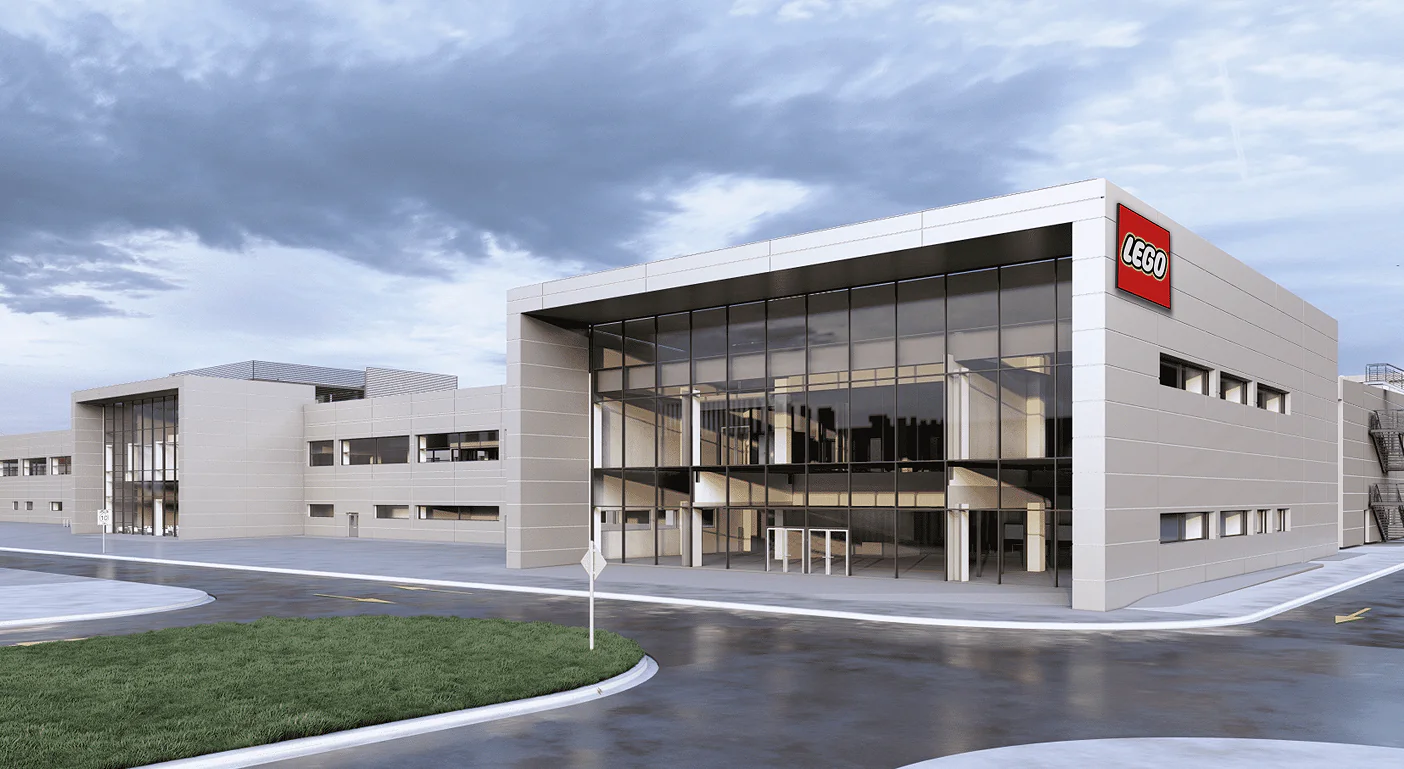
LEGO is one of the most recognized toy brands in the world. Founded in Denmark in 1932, the company built its reputation on precision, consistency, and strict quality control. Every LEGO brick must fit perfectly with another brick made decades earlier. That level of accuracy requires an advanced manufacturing system.
Although LEGO is a Danish brand, its production is global. Over the years, LEGO has established factories in several countries to serve different regional markets and reduce logistics pressure.
Main manufacturing locations include:
- Billund, Denmark (original production base)
- Kladno, Czech Republic
- Nyíregyháza, Hungary
- Monterrey, Mexico
- Jiaxing, China
- Vietnam (new large-scale facility under development)
This multi-country layout allows LEGO to shorten delivery time and reduce transportation costs while maintaining global quality standards.
China Manufacturing – Strategic Asia-Pacific Base
LEGO opened its factory in Jiaxing, Zhejiang province, in 2016. This marked a major investment in the Asia-Pacific region. The plant mainly supplies China, Japan, South Korea, and other nearby markets.
The Jiaxing factory is not a low-end assembly site. It is a highly automated production facility that follows the same strict technical standards as the European plants.
China-based production focuses on:
- High-precision injection molding
- Color consistency control
- Brick clutch power testing
- Automated packaging lines
- Regional distribution efficiency
LEGO bricks require extremely tight tolerances. Even small deviations can affect product compatibility. The China facility uses advanced molding machines and strict quality monitoring systems to ensure that every brick meets global specifications.
Another advantage of manufacturing in China is supply chain proximity. The region offers strong support in:
- Plastic raw material sourcing
- Mold manufacturing expertise
- Packaging production
- Skilled technical labor
For LEGO, China is not simply a cost-saving location. It is a strategic production hub that strengthens regional supply stability and supports fast-growing Asian markets.
This global + regional manufacturing model shows how a premium toy brand balances brand heritage with modern supply chain efficiency.
1.2 Mattel – American Toy Giant
Brand Origin: USA
Manufacturing Countries: China, Indonesia, Malaysia, Mexico
Mattel is one of the largest toy companies in the world. Founded in the United States, the company owns globally recognized brands such as Barbie, Hot Wheels, Fisher-Price, and many licensed character products.
Although Mattel operates across multiple countries, China has long been its most important production base.
China Manufacturing – Core Production Hub
For decades, China has served as Mattel’s primary manufacturing center. While the company has expanded into Southeast Asia to balance risk and improve flexibility, China continues to play a central role in its global supply chain.
China-based production covers a wide range of product categories:
- Barbie dolls
- Plastic accessories
- Electronic components
- Licensed character toys
- Complex molded parts
- Multi-material assemblies
These products require more than simple assembly. They demand precise mold development, strict color control, stable material sourcing, and consistent quality management.
Why China Remains Critical for Mattel
Even with global diversification, China maintains several structural advantages.
1️⃣ Mature Plastic Injection Ecosystem
China has one of the most developed plastic injection supply chains in the world. From raw material suppliers to mold manufacturers and surface finishing providers, everything is located within tightly connected industrial clusters. This reduces production lead time and coordination costs.
2️⃣ Skilled Toy Manufacturing Clusters
Regions such as Guangdong and Zhejiang have decades of experience in toy production. Workers, engineers, and QC teams understand international safety standards and licensed product requirements. This accumulated know-how is difficult to replicate quickly in newer markets.
3️⃣ Integrated Packaging & Printing Support
Toy products require high-quality packaging, blister cards, color boxes, and branding elements. China’s packaging ecosystem is highly developed and located close to production facilities. This improves efficiency and reduces transportation delays between suppliers.
4️⃣ Strong Export Infrastructure
China’s port system, freight forwarding network, and customs experience are highly optimized for toy exports. Large-scale shipments can be processed efficiently. This is critical for global brand launches with tight delivery schedules.
1.3 Hasbro – Multi-Country Production Strategy
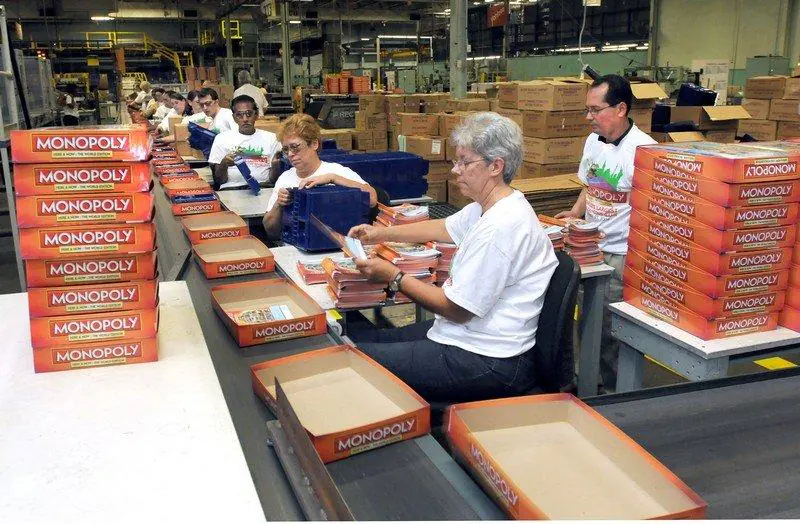
Brand Origin: USA
Manufacturing Countries: China, Vietnam, India
China Manufacturing (Complex & Licensed Toys)
China has historically been Hasbro’s largest manufacturing base.
Key product types:
- Transformers
- Nerf components
- Licensed Marvel toys
- Board game components
China factories handle:
- Complex mold systems
- Multi-part assembly
- Electronic testing
- Safety compliance preparation
For toys requiring precision molding or strong QC control, China remains competitive.
2. Why So Many Famous Toy Brands Manufacture in China?
When people see “Made in China” on famous toy brands, many assume the reason is low labor cost. That explanation is outdated. The real reason is structural strength. China has built a complete, deeply integrated toy manufacturing ecosystem over several decades. For global brands that require precision, safety compliance, and scalable production, this ecosystem provides stability that few countries can match.
Below are the core reasons explained in detail.
2.1 Complete Toy Supply Chain Ecosystem
Toy production is not just about assembly. It involves material sourcing, mold development, component production, printing, packaging, and global shipping coordination. In China, all of these elements exist within tightly connected industrial clusters.
In provinces such as Guangdong, Zhejiang, and Jiangsu, plastic suppliers, mold factories, electronic component producers, and packaging companies are often located within short driving distance of each other. This geographical concentration dramatically reduces communication delays and logistics costs. If a mold requires modification, engineers can respond quickly. If packaging artwork needs revision, samples can be produced and delivered within days.
This density of specialized suppliers allows toy brands to move from design to mass production more efficiently. Development cycles become shorter. Risk becomes more manageable. For global brands launching seasonal products, this speed is a major competitive advantage.
2.2 Mature Mold and Injection Technology
Modern toys demand precision engineering. A small dimensional error can cause assembly failure or safety issues. High-end brands require tight tolerance control, stable color consistency, strong surface finishing quality, and long-term structural durability.
China’s mold industry has developed strong technical depth. Many factories invest heavily in advanced CNC equipment, EDM systems, and high-speed injection molding machines imported from Germany or Japan. Skilled mold engineers and technicians have years of experience handling complex multi-cavity molds and fine structural components.
This technical maturity ensures that products manufactured in China can meet the same standards as those produced in Europe or North America. For toys that involve multiple small parts or intricate structures, mold precision directly determines product performance. China’s capability in this area remains globally competitive.
2.3 Strong Quality Control and Compliance System
Global toy brands must comply with strict safety regulations. Markets such as the United States and the European Union enforce standards like ASTM, EN71, CPSIA, and REACH. Failure to comply can result in recalls, fines, or reputational damage.
Export-focused Chinese factories are highly familiar with these regulatory requirements. Many have worked with international clients for decades and understand documentation, traceability, and audit processes. It is common for established factories to operate internal laboratories for material testing and mechanical performance checks.
Quality control procedures typically include pre-production material verification, in-line inspection during production, and final pre-shipment inspection. For licensed toys, brand audits are even stricter. Compliance is continuously monitored rather than treated as a one-time requirement.
This systematic approach to quality control reduces uncertainty for global brands. It also explains why complex and licensed products continue to be manufactured in China.
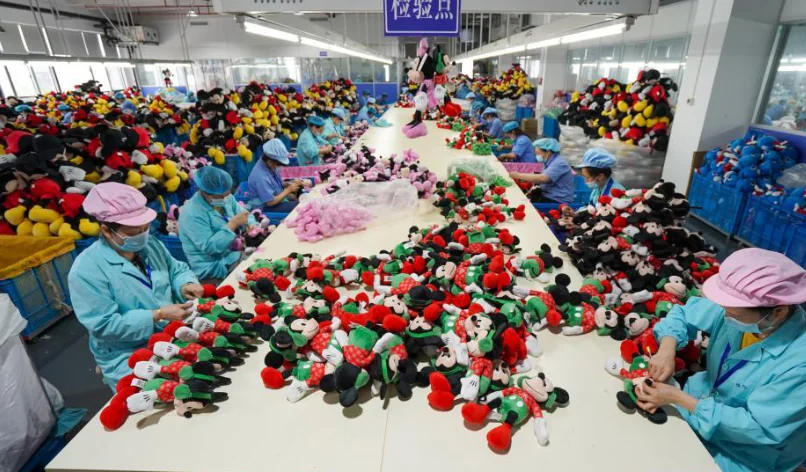
2.4 Scalability and Mass Production Capability
Large toy brands launch products globally. Production volume can increase dramatically within a short period. A factory must be able to scale from tens of thousands of units to hundreds of thousands without sacrificing consistency.
China’s industrial infrastructure supports this level of scalability. Raw materials are readily available. Skilled assembly workers are experienced in handling high-volume orders. Production lines can be expanded quickly when demand rises.
At the same time, major ports such as Shenzhen, Ningbo, and Shanghai provide efficient export channels. Reliable shipping schedules are critical for toys tied to movie releases or holiday seasons. China’s logistics network is designed to handle large export volumes with stability.
Few manufacturing regions can match this combination of production elasticity and logistical efficiency.
2.5 Cost Efficiency Combined with Technical Capability
Manufacturing is never only about the lowest price.
While Southeast Asia continues to grow, China still leads in:
- Complex structural toys
- Electronic toys
- Multi-material combination products
- High-detail licensed items
The unit cost may not always be the lowest globally.
However, the cost-to-quality ratio remains highly competitive.
For products that require engineering depth, strict QC control, and reliable scaling, China often delivers better overall value.
That balance between cost and technical capability is why many famous toy brands continue to rely on China as a core manufacturing base.
3. Manufacturing Comparison Overview
When we compare leading toy brands, one pattern becomes clear. Production is global, but China remains a core pillar in the manufacturing network.
Below is a simplified overview of several well-known brands and their production layout.
| Brand | Brand Origin | Role of China in Production | Other Key Manufacturing Countries |
| LEGO | Denmark | Strategic Asia-Pacific production hub | Denmark, Mexico, Hungary, Czech Republic, Vietnam |
| Mattel | USA | Major long-term core production base | Indonesia, Malaysia, Mexico |
| Hasbro | USA | Historically largest production base | Vietnam, India |
4. What This Means for Toy Buyers
If world-class toy brands choose to manufacture in China, that decision sends a clear signal to the market. Global companies do not take production risks lightly. They evaluate engineering capability, compliance systems, scalability, and long-term reliability before committing to a region.
For toy buyers, this carries several important implications.
First, China manufacturing is not “low-end.” The perception that China only produces cheap or basic products no longer reflects reality. The same industrial ecosystem that supports premium global brands is available to private label companies and importers. The difference is not the country. The difference is how the supply chain is managed.
Second, high safety standards are fully achievable. Products manufactured in China can meet ASTM, EN71, CPSIA, and REACH requirements when produced in qualified export factories. Compliance depends on process control, material verification, and proper testing. It is not determined by geography alone.
Third, large-scale production is stable. If factories can support global launches for multinational toy brands, they are technically capable of supporting mid-size importers as well. The infrastructure for scaling production already exists. What matters is order planning and supplier coordination.
Fourth, complex toys can be executed reliably. Multi-part assemblies, electronic integration, licensed character products, and high-detail molding are already part of China’s daily manufacturing routine. The engineering knowledge is mature. The supporting industries are established.
However, one critical factor must be emphasized. The advantage does not automatically apply to every factory. China has thousands of toy manufacturers with varying levels of capability. The real difference lies in factory selection, audit standards, and quality control management.
Choosing the right supplier, implementing structured inspection checkpoints, verifying materials before production, and conducting final inspections before shipment are what separate successful sourcing projects from problematic ones.
For toy buyers, the lesson is clear. The opportunity in China is strong. But professional supplier evaluation and disciplined QC management are essential to unlocking that potential safely and consistently.
5. How This Supports Smaller Brands & Importers
Many mid-size importers believe that only global toy giants can access reliable Chinese factories. They assume the best production capacity is locked behind million-unit orders and exclusive contracts.
In reality, the ecosystem is broader than that.
China’s toy industry is layered. Some factories focus only on top-tier multinational brands. Others are export-oriented manufacturers that serve growing brands, wholesalers, and private label companies. With the right sourcing structure, smaller buyers can access strong manufacturing resources.
5.1 Access to Export-Certified Factories
Many Chinese toy factories are already certified for export markets. They understand ASTM, EN71, CPSIA, and REACH requirements because they regularly ship to the US and Europe.
These factories maintain compliance documentation, material traceability systems, and production records. Smaller brands can work with them as long as orders are planned clearly and expectations are defined early.
The key is supplier screening. Factory audits, background checks, and capability assessments help determine whether a manufacturer matches your product requirements and growth plans.
5.2 Structured Material Verification
One major risk in toy sourcing is material substitution. The approved sample may use compliant materials, while mass production may switch to lower-cost alternatives if controls are weak.
Smaller brands can prevent this by implementing material verification before production starts. This includes confirming resin type, paint formulation, and component specifications. Early verification reduces safety risks and protects long-term brand credibility.
Material control is not expensive compared to the cost of a recall. It is a discipline rather than a luxury.
5.3 Implementing Clear QC Checkpoints
Quality control should not begin at the end of production. It should be structured throughout the process.
Smaller importers can establish:
- Pre-production confirmation of samples and materials
- During-production inspections to catch defects early
- Pre-shipment inspections to verify quantity and quality
These checkpoints reduce the risk of receiving inconsistent goods. They also build accountability into the supplier relationship.
Even if order volumes are smaller than multinational brands, structured QC management creates professional standards that factories respect.
5.4 Protecting Intellectual Property
Private label brands often worry about mold copying or design leakage. While risks exist in any manufacturing region, proper documentation significantly reduces exposure.
Clear mold ownership agreements, NDAs, and contract clauses can define intellectual property boundaries. Many export-focused factories are already familiar with IP protection requirements because they produce licensed toys for international brands.
When legal frameworks and documentation are properly handled, smaller brands can operate with greater confidence.
In summary, the Chinese toy manufacturing ecosystem is not reserved for global corporations. With organized sourcing support, clear agreements, and disciplined quality management, smaller brands and importers can access the same industrial advantages that power world-famous toy companies.
Conclusion
Famous toy brands may be global in image, but their manufacturing decisions are grounded in practical realities. Over the past several decades, China has developed into one of the most complete and technically capable toy production ecosystems in the world. This position was not built on low cost alone. It was built on supply chain density, engineering depth, compliance experience, and large-scale execution capability.
From precision molds and electronic integration to licensed character production and global safety compliance, China continues to handle some of the most demanding categories in the toy industry. Even as brands diversify into Southeast Asia or other regions, China remains a central pillar rather than a temporary solution.
For toy buyers, importers, and private label brands, the message is clear. The opportunity in China is real and structurally strong. High standards are achievable. Complex products are executable. Large-scale production is manageable.
The deciding factor is not the country. It is the system you build around supplier selection, material verification, and quality control management.
When sourcing is handled professionally, China is not just a manufacturing option. It becomes a long-term strategic advantage.