
Finding reliable suppliers and understanding global product trends is one of the biggest challenges for importers, wholesalers, and e-commerce sellers. With thousands of factories and suppliers online, knowing which B2B sourcing platforms to trust—and how to use them—is essential for your business success.
This article explains the key differences between popular B2B sourcing platforms, including Alibaba, YiwuGo, 1688, Made-in-China, and Global Sources, as well as platforms that influence product trends like Amazon, Temu, and SHEIN. By understanding these platforms, you can make smarter sourcing decisions, control costs, and reduce risks.
What Are B2B Sourcing Platforms?
B2B sourcing platforms are online marketplaces that connect buyers with manufacturers, wholesalers, or trading companies. Unlike consumer marketplaces, they focus on bulk purchasing, OEM/ODM customization, and cross-border trade.
Most B2B sourcing platforms provide:
- Extensive supplier directories and product catalogs
- Inquiry and messaging tools to negotiate with suppliers
- Trade assurance or escrow-style payments to reduce risk
- Optional logistics and inspection services
However, not all platforms serve the same purpose. Some are factory-focused, others emphasize ready-stock wholesale, and some, like Amazon or Temu, are better used as market intelligence tools rather than sourcing directly.
Alibaba: The Global B2B Giant
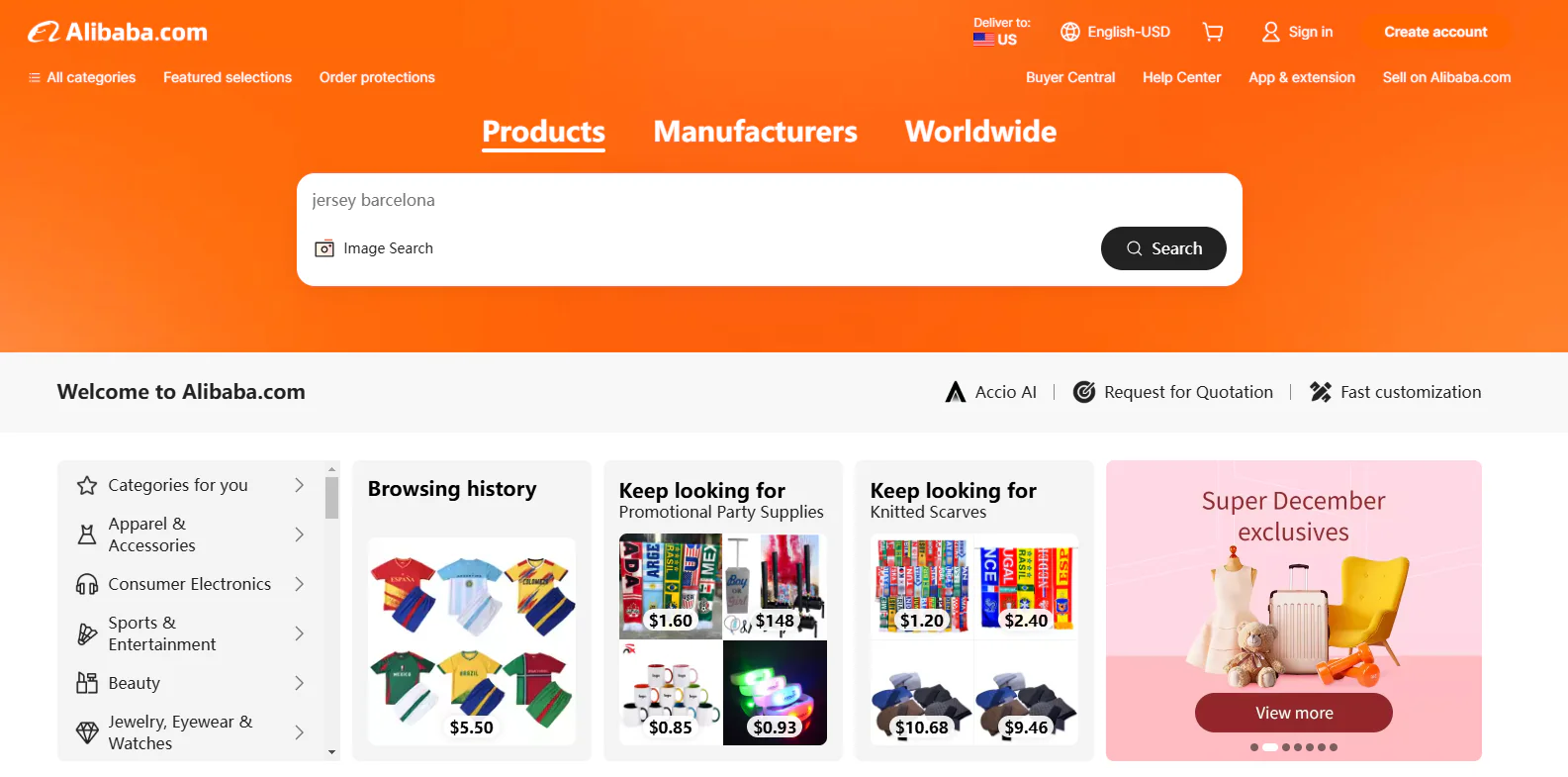
Alibaba.com is the most recognized B2B sourcing platform in the world. For many overseas buyers, it is the first place to search for suppliers when sourcing products from China and other manufacturing hubs.
How Alibaba works
Alibaba operates as an open marketplace where factories and trading companies list products across almost every category, from home and kitchenware to electronics, toys, and industrial goods. Buyers can send inquiries, request samples, compare quotations, and negotiate OEM or private-label projects directly with suppliers.
Features like Trade Assurance help protect payments and shipments, making Alibaba relatively accessible for first-time importers and small to mid-sized businesses.
Why Alibaba matters in sourcing decisions
Alibaba offers unmatched scale and convenience. Buyers can quickly test supplier responsiveness, benchmark prices, and evaluate product customization options. For many businesses, Alibaba is the starting point for building long-term supply chains.
Most successful Amazon sellers, wholesalers, and brand owners use Alibaba to identify potential factories, then refine their supplier list through sampling, audits, and inspections.
Common challenges buyers face
Despite its size, Alibaba requires careful supplier evaluation. Many listings belong to trading companies rather than factories, and quoted prices often change after deeper discussions. Quality control, production follow-up, and logistics coordination are not handled by the platform itself.
For buyers scaling orders or managing multiple SKUs, these gaps often require external sourcing support to reduce risk.
Best used for:
Supplier discovery, OEM/private-label sourcing, price comparison, and scalable production planning.
YiwuGo: Direct Access to China’s Largest Wholesale Market
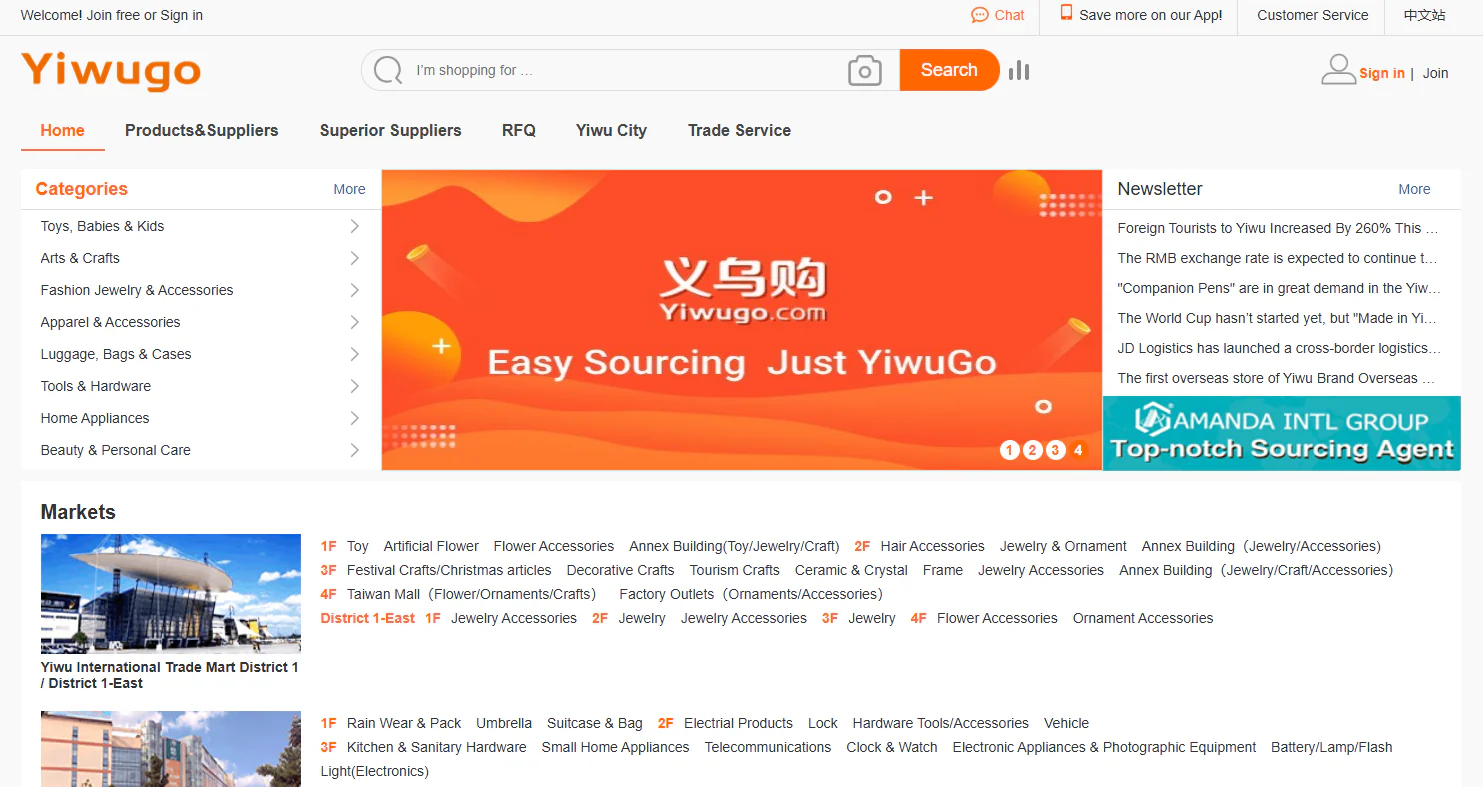
YiwuGo is the official online platform of Yiwu International Trade City, the world’s largest small-commodity wholesale market. Among modern B2B sourcing platforms, YiwuGo stands out by directly connecting buyers with real, booth-based wholesalers operating inside the physical Yiwu Market.
How YiwuGo works
Unlike open marketplaces focused on factory listings, YiwuGo mirrors the structure of the offline Yiwu Market. Each supplier typically represents a physical booth, offering ready stock or fast-turnaround products rather than large-scale OEM manufacturing.
Buyers can browse product catalogs, contact suppliers, and source multiple product categories in one place. When combined with local sourcing support, YiwuGo enables efficient mixed-product sourcing and flexible order quantities.
Why YiwuGo matters in sourcing decisions
YiwuGo is especially valuable for buyers who need low to medium MOQs, fast replenishment, and a wide variety of consumer goods such as home décor, kitchenware, toys, stationery, gifts, and seasonal items.
For wholesalers and retailers, YiwuGo reduces lead times and lowers entry barriers compared with factory-focused B2B sourcing platforms. It is also ideal for testing new products before scaling production through platforms like Alibaba.
Limitations for B2B buyers
YiwuGo is less suitable for complex OEM projects or highly customized products. Some suppliers have limited English communication, and pricing negotiations may require on-the-ground coordination.
Best used for:
Wholesale buyers, mixed-container sourcing, low-MOQ orders, and fast-moving consumer goods
1688: Domestic China Wholesale for Cost-Savvy Buyers
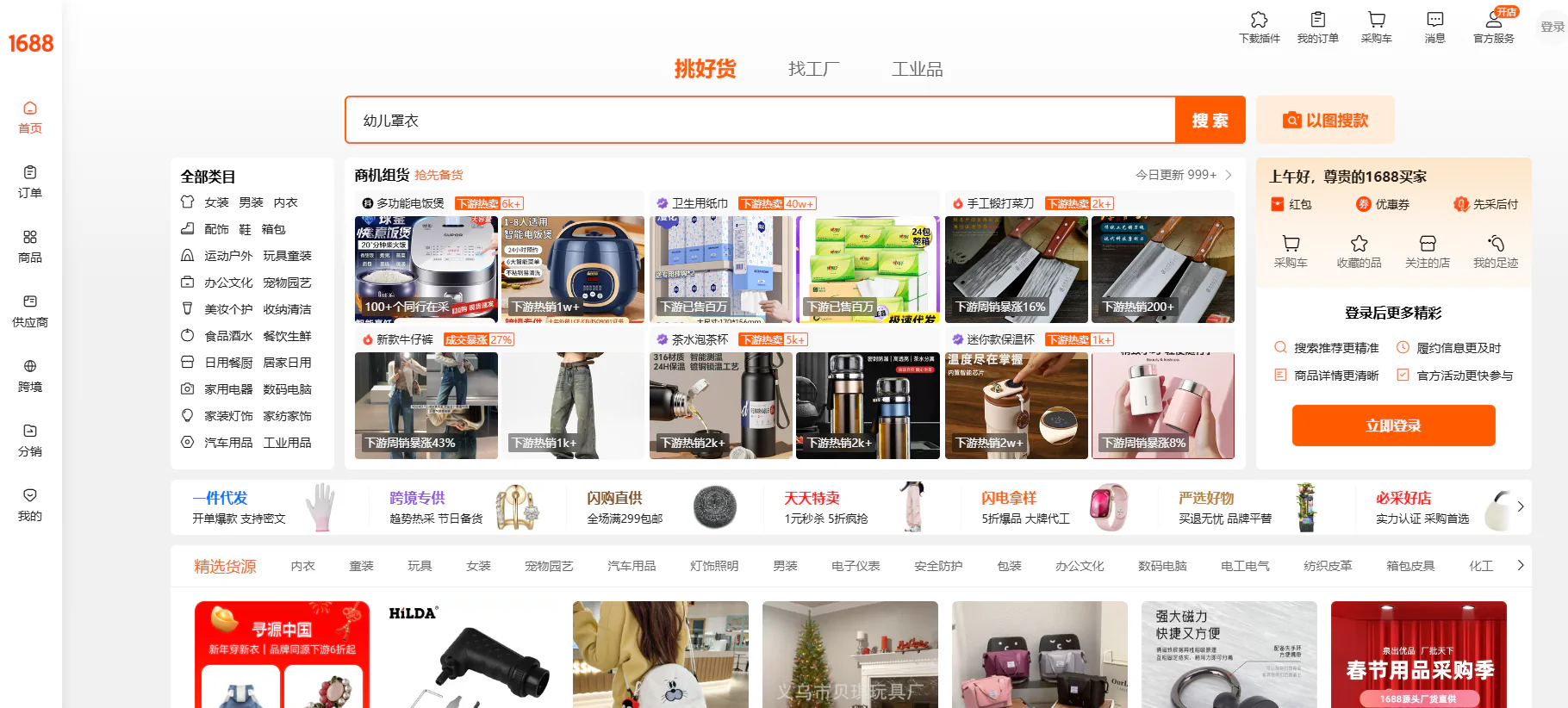
1688.com is Alibaba Group’s domestic wholesale marketplace and plays a unique role among modern B2B sourcing platforms. While it is not designed for overseas buyers, it offers direct access to China’s local supply base, often at significantly lower prices than export-focused platforms.
How 1688 works
Suppliers on 1688 primarily serve the domestic Chinese market. Many are factories or first-tier wholesalers that do not actively promote on international platforms. Product listings usually show real market prices, smaller MOQs, and ready-stock options.
Because the platform operates entirely in Chinese, payments are typically made via Alipay, and most suppliers do not handle export documentation. As a result, overseas buyers often rely on China sourcing agents to communicate, pay, and manage logistics.
Why 1688 matters in sourcing decisions
For importers focused on cost control, 1688 is an essential reference point. It helps buyers understand true factory pricing and identify suppliers before scaling production on Alibaba or sourcing mixed goods through YiwuGo.
1688 is also valuable for product testing and short production runs, especially for fast-moving consumer goods.
Limitations for B2B buyers
1688 is not buyer-friendly for international users. Language barriers, domestic-only payment systems, and limited export support make direct sourcing challenging without local assistance.
Best used for:
Price benchmarking, low-MOQ sourcing, product testing, and buyers working with a sourcing agent
Made-in-China: Factory-Oriented Sourcing
Made-in-China.com is a long-established B2B sourcing platform that places stronger emphasis on manufacturers rather than trading companies. Compared with broader marketplaces, it is designed for buyers who prioritize factory transparency and technical capability.
How Made-in-China works
Suppliers on Made-in-China are typically factories with export experience. Many profiles include factory audits, certifications, production capacity, and machinery details, helping buyers better evaluate manufacturing capabilities before making contact.
The platform is particularly strong in industrial products, machinery, electronics, hardware, and OEM manufacturing, where production standards and technical communication matter more than speed or low MOQs.
Why Made-in-China matters for sourcing decisions
For importers sourcing complex or specification-driven products, Made-in-China reduces the risk of dealing with layers of intermediaries. Buyers can communicate directly with manufacturers, clarify technical requirements, and plan long-term production more effectively.
Although prices may not always be the lowest, the platform often delivers better consistency and clearer factory accountability, which is critical for repeat orders.
Limitations for B2B buyers
Made-in-China is less suitable for buyers seeking ready stock consumer goods or very low MOQs. Product variety is narrower than Alibaba, and sourcing speed depends heavily on factory response times.
Best used for:
Industrial products, OEM manufacturing, technical goods, and buyers seeking factory-direct partnerships.
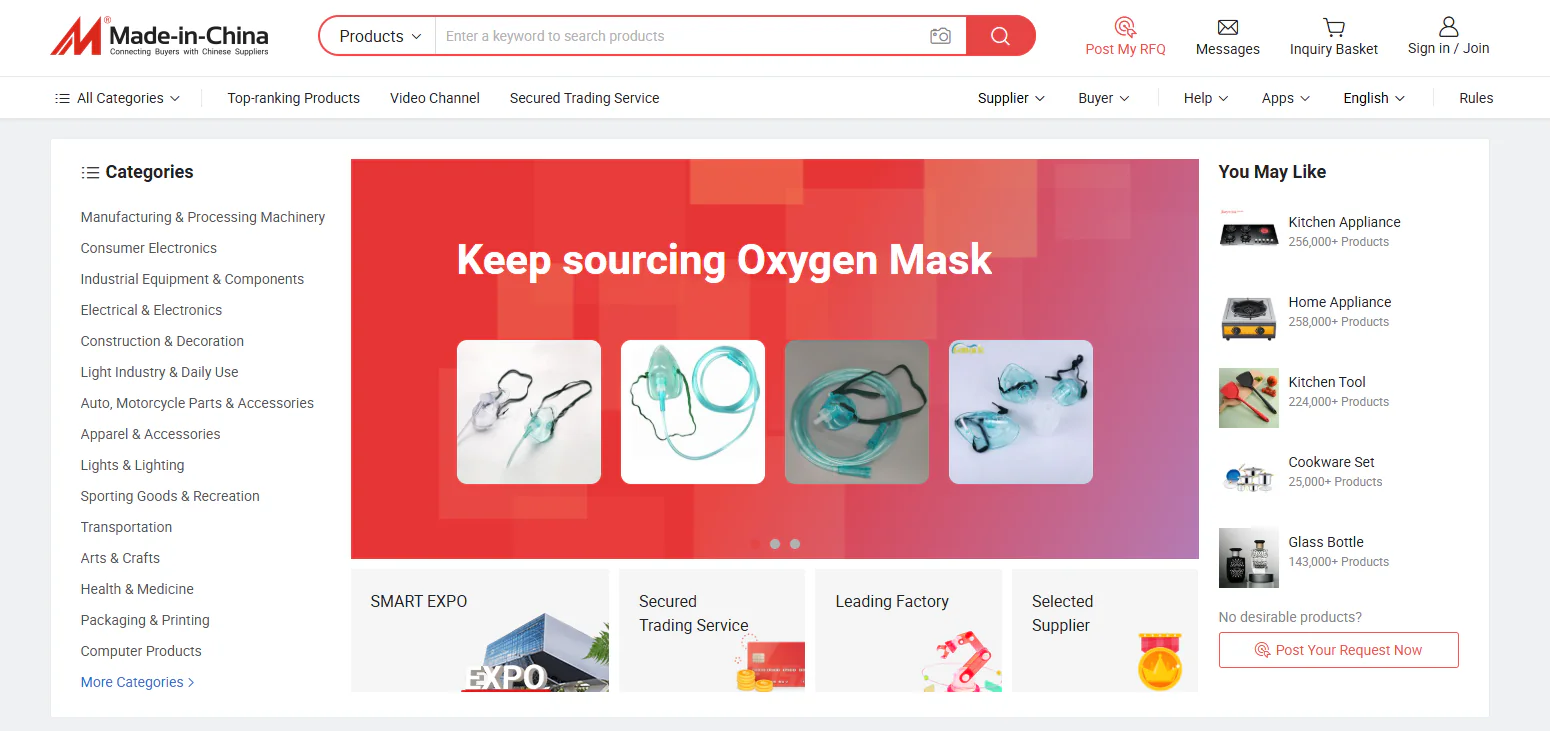
Global Sources: Verified Suppliers for Serious Buyers
Global Sources is a well-established B2B sourcing platform known for its emphasis on supplier verification and buyer credibility. Unlike open marketplaces, it positions itself as a more curated environment, serving buyers who value reliability over the lowest possible price.
How Global Sources works
Suppliers on Global Sources typically undergo stricter vetting compared to many open B2B sourcing platforms. The platform focuses heavily on export-ready manufacturers, especially in electronics, consumer goods, gifts, and lifestyle products.
Global Sources is also closely linked to its offline trade shows in Hong Kong and other Asian hubs, creating a bridge between online supplier discovery and face-to-face sourcing.
Why Global Sources matters in sourcing decisions
For importers and brand owners, Global Sources offers a lower-risk entry point when sourcing higher-value products. Supplier profiles often include export experience, certifications, and production capabilities, making it easier to assess long-term partnership potential.
While prices may not be as competitive as 1688 or YiwuGo, the reduced risk and higher communication standards appeal to buyers focused on brand consistency and compliance.
Limitations for B2B buyers
Global Sources is less suitable for small orders or buyers seeking very low MOQs. The platform works best for businesses with defined sourcing plans, clear specifications, and sufficient order volume.
Best used for:
Brand-level buyers, electronics sourcing, export-ready manufacturers, and buyers combining online sourcing with trade show visits.
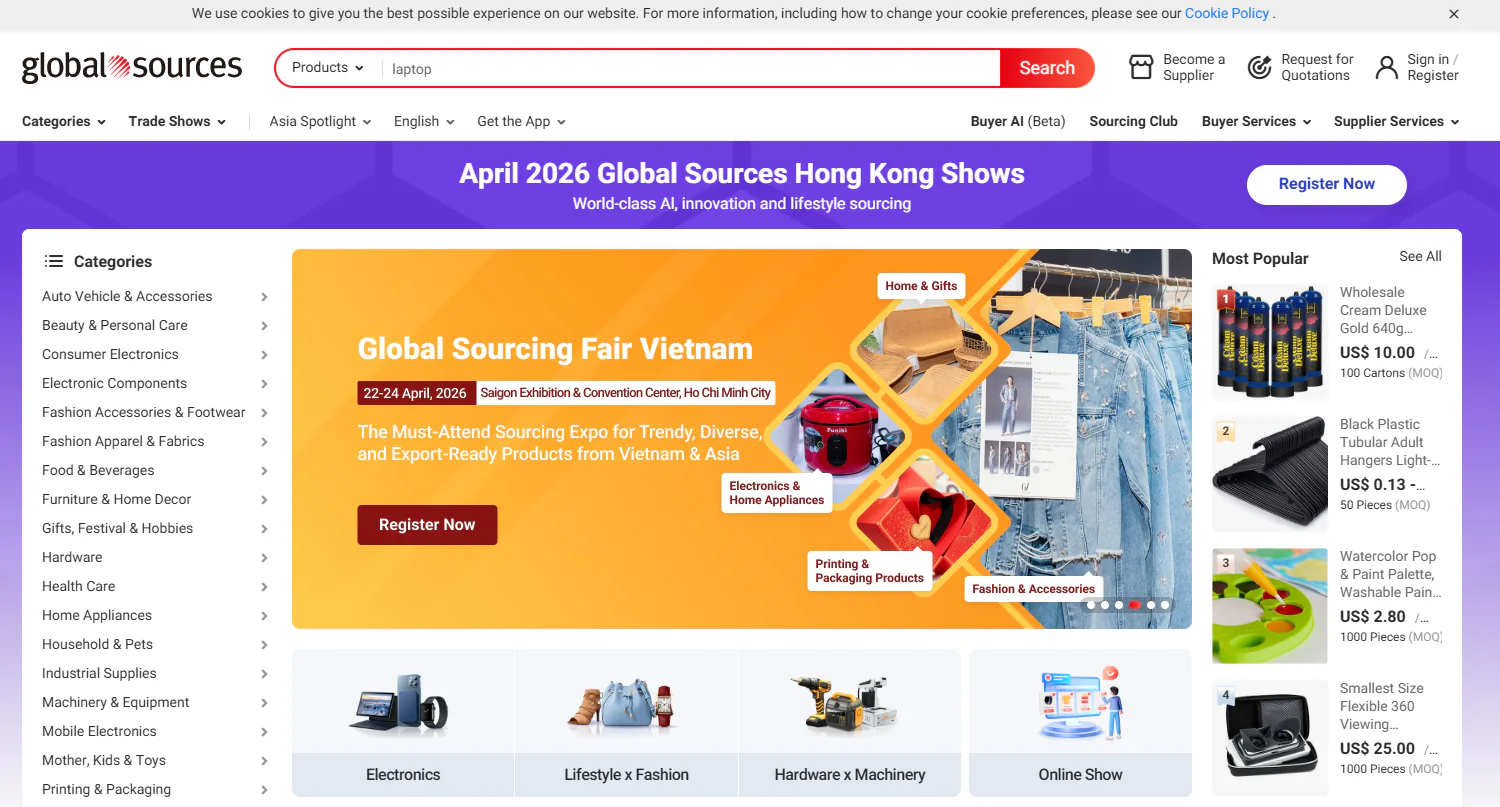
Amazon: Demand and Competition Intelligence
Amazon is often mistaken as a place to find suppliers, but it is not a B2B sourcing platform. Instead, Amazon functions as the world’s largest real-time demand and competition database, shaping how importers decide what to source and how to position their products.
How Amazon influences sourcing decisions
Amazon reflects actual purchasing behavior at scale. Data such as Best Seller Rank (BSR), review volume, pricing tiers, and listing formats help buyers validate demand before placing bulk orders. Unlike trend-driven platforms, Amazon is heavily private-label oriented, meaning successful products are often backed by repeatable and scalable supply chains.
Most Amazon sellers source through Alibaba, YiwuGo, or 1688, then optimize products for FBA or FBM requirements.
Why Amazon matters for B2B buyers
For importers and sourcing professionals, Amazon is a decision filter. A product with stable rankings and consistent reviews usually indicates sustainable demand. Amazon also sets quality, packaging, and compliance benchmarks, influencing how factories must prepare products for export.
By studying top listings, buyers can better understand:
- Target price ranges and margin expectations
- Packaging and labeling standards
- Certification and compliance requirements
These insights directly impact supplier selection on traditional B2B sourcing platforms.
Limitations for direct sourcing
Amazon does not offer supplier discovery, factory verification, or direct negotiation tools. Buyers must source off-platform and manage production, quality control, and logistics independently or through a sourcing agent.
Best used for:
Demand validation, pricing benchmarks, competition analysis, and long-term SKU planning—not supplier sourcing.
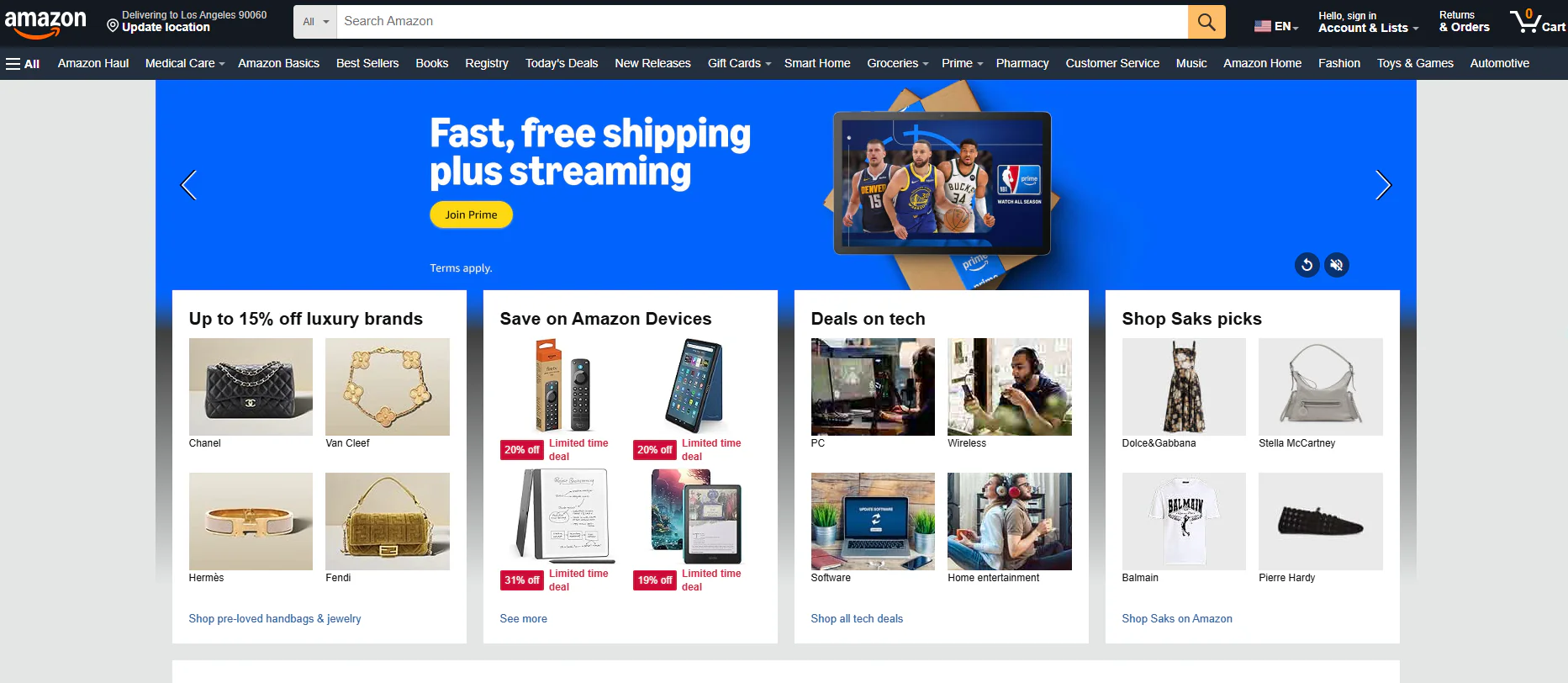
Temu: Trend and Price Signals for Mass-Market Goods
Temu is often mentioned alongside B2B sourcing platforms, but it works very differently from platforms like Alibaba or YiwuGo. Temu is a consumer-facing marketplace, backed by Pinduoduo, built around a centralized and demand-driven supply chain.
How Temu really works
Temu does not allow open supplier search or free product listings. Instead, the platform controls product selection, pricing, logistics, and traffic distribution. Suppliers are onboarded based on factory cost advantages, production capacity, and delivery speed, rather than brand or customization capability.
This model allows Temu to push extremely low prices, but it also means suppliers operate on thin margins and strict performance metrics.
Why Temu matters in sourcing decisions
Although Temu is not a B2B sourcing platform, it plays an important role in product research and pricing intelligence. Products that perform well on Temu usually reflect strong mass-market demand in the U.S. and European markets. For importers and sourcing professionals, Temu helps answer key questions:
- What product categories are highly price-sensitive?
- What is the lowest viable retail price in mass markets?
- Which SKUs have potential for large-volume sales?
By studying Temu listings, buyers can benchmark costs before moving to Alibaba, YiwuGo, or 1688 to find scalable suppliers.
Limitations for B2B buyers
Temu is not suitable for buyers looking for flexible MOQs, private labeling, or OEM customization. Supplier communication is indirect, and sourcing decisions remain fully controlled by the platform.
Best used for:
Trend validation, price benchmarking, and identifying high-volume consumer products—not for direct B2B procurement.
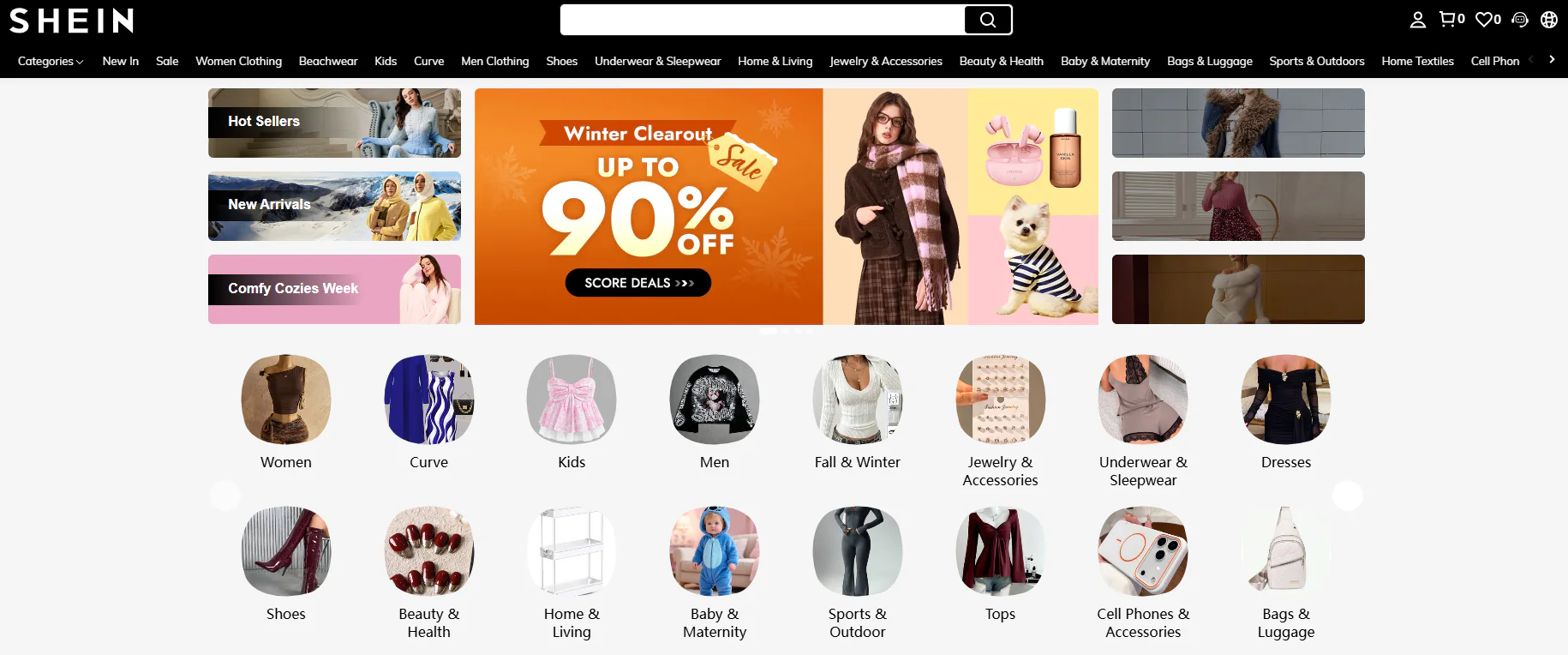
SHEIN: Fast-Fashion Supply Chain Insights
SHEIN is often discussed together with B2B sourcing platforms, but it does not operate as an open marketplace. Instead, SHEIN runs a closed and highly data-driven supply chain, especially dominant in apparel, accessories, and lightweight consumer goods.
How SHEIN sources products
SHEIN relies on real-time consumer data to test designs in small batches and rapidly scale only the best-performing items. Suppliers are carefully selected and must meet strict standards on production speed, cost control, and order flexibility. Most supplier relationships are long-term and invitation-based, with limited access for new buyers.
This model allows SHEIN to respond to market trends faster than traditional sourcing platforms.
Why SHEIN matters for sourcing strategy
Although buyers cannot source directly from SHEIN, the platform is a powerful trend signal. Product launches, pricing ranges, and material choices on SHEIN often indicate upcoming demand in fashion, beauty accessories, home textiles, and seasonal items.
For importers and sourcing professionals, SHEIN helps identify:
- Fast-moving product categories
- Acceptable cost and quality levels for mass markets
- Short product life cycles that require flexible suppliers
These insights can then be applied when sourcing through Alibaba, YiwuGo, or 1688.
Limitations for B2B buyers
SHEIN does not support supplier discovery, inquiries, or OEM customization for third-party buyers. It is not suitable for private-label sourcing or small-batch testing outside its ecosystem.
Best used for:
Fashion and lifestyle trend analysis, supply chain speed benchmarking, and product lifecycle insights—not direct procurement.
Comparing Platforms at a Glance
| Platform | Type | MOQ | Buyer Access | Primary Value |
| Alibaba | B2B marketplace | Medium–High | Yes | Supplier discovery & OEM |
| YiwuGo | Wholesale market | Low–Medium | Yes | Ready-stock & mixed sourcing |
| 1688 | Domestic wholesale | Very Low | Limited | Cost optimization |
| Made-in-China | Factory directory | Medium–High | Yes | Industrial & OEM sourcing |
| Global Sources | Verified B2B | Medium–High | Yes | Brand-level suppliers |
| Amazon | Retail marketplace | N/A | Yes | Demand & competition intelligence |
| Temu | Retail/demand-driven | Very High | No | Trend & price signals |
| SHEIN | Fast-fashion supply chain | High | No | Trend & supply chain insights |
How to Choose the Right B2B Sourcing Platform
Choosing from so many B2B sourcing platforms can feel overwhelming. The key is to match the platform with your business stage, product type, and order volume. Follow these steps to make a smarter decision and avoid costly sourcing mistakes.
Step 1: Define Your Sourcing Goal Clearly
Start by identifying what you actually need from a sourcing platform.
If your goal is OEM manufacturing or private labeling, factory-focused platforms like Alibaba or Made-in-China are more suitable. These platforms allow detailed customization and scalable production.
If you are sourcing ready-stock products with lower MOQs or building mixed containers, YiwuGo or 1688 will be more efficient and cost-effective.
When your priority is product research or demand validation, platforms like Amazon, Temu, and SHEIN help you understand market demand—but they should not be used for direct sourcing.
Step 2: Match the Platform to Your Order Volume and Budget
Different platforms are designed for different order sizes.
Smaller or test orders benefit from YiwuGo and 1688, where MOQs are flexible and lead times are shorter. Larger, repeat orders work better on Alibaba, Made-in-China, or Global Sources, where factories can handle scale and compliance.
Understanding this alignment helps you avoid supplier mismatches and pricing surprises.
Step 3: Evaluate Supplier Type and Risk Level
Not all suppliers are factories. Many listings on open B2B sourcing platforms belong to trading companies.
If factory-direct accountability and certifications are important, prioritize Made-in-China or carefully vetted suppliers on Alibaba and Global Sources. If speed and variety matter more than customization, YiwuGo vendors are often a better fit.
Step 4: Consider Communication, Compliance, and Logistics
Sourcing is more than finding a product. You must manage communication, quality control, packaging standards, and international shipping.
Platforms alone do not handle inspections or shipment follow-up. This is where many buyers face delays, quality issues, or hidden costs—especially when working across time zones and languages.
Step 5: Combine Platforms with a Global Sourcing Agent
Experienced importers rarely rely on a single platform. Instead, they combine B2B sourcing platforms with professional sourcing support to reduce risk and improve efficiency.
A global sourcing agent helps you:
Identify the right suppliers across multiple platforms
Verify factories and avoid middlemen
Negotiate pricing and MOQs
Conduct quality inspections before shipment
Coordinate logistics and documentation
This approach is especially valuable when sourcing from China and other Asian manufacturing hubs.
Work with a Global Sourcing Agent You Can Trust
At Homevolutionchina, we help global buyers source products from China through Alibaba, YiwuGo, 1688, and factory-direct channels—all with one point of contact.
Whether you are testing new products or scaling established SKUs, our team supports you with supplier verification, quality control, and end-to-end logistics, so you can focus on growing your business.