
What Are Incoterms, Really?
Think of Incoterms as the universal language of international shipping. Created by the International Chamber of Commerce, these terms have been around since 1936, constantly evolving to keep up with how we actually do business today. The latest version, Incoterms 2020, reflects our modern world of container shipping and digital transactions.
Here’s the thing: without these standardized terms, every international deal would be a nightmare of confusion. Who pays for what? When does risk transfer? Who’s responsible if something goes wrong during shipping? Incoterms answer all these questions upfront, saving everyone countless headaches and legal disputes.
According to the World Trade Organization, global merchandise trade exceeds $28 trillion annually. That’s a lot of potential for miscommunication without clear rules!
The 11 Incoterms You Need to Know
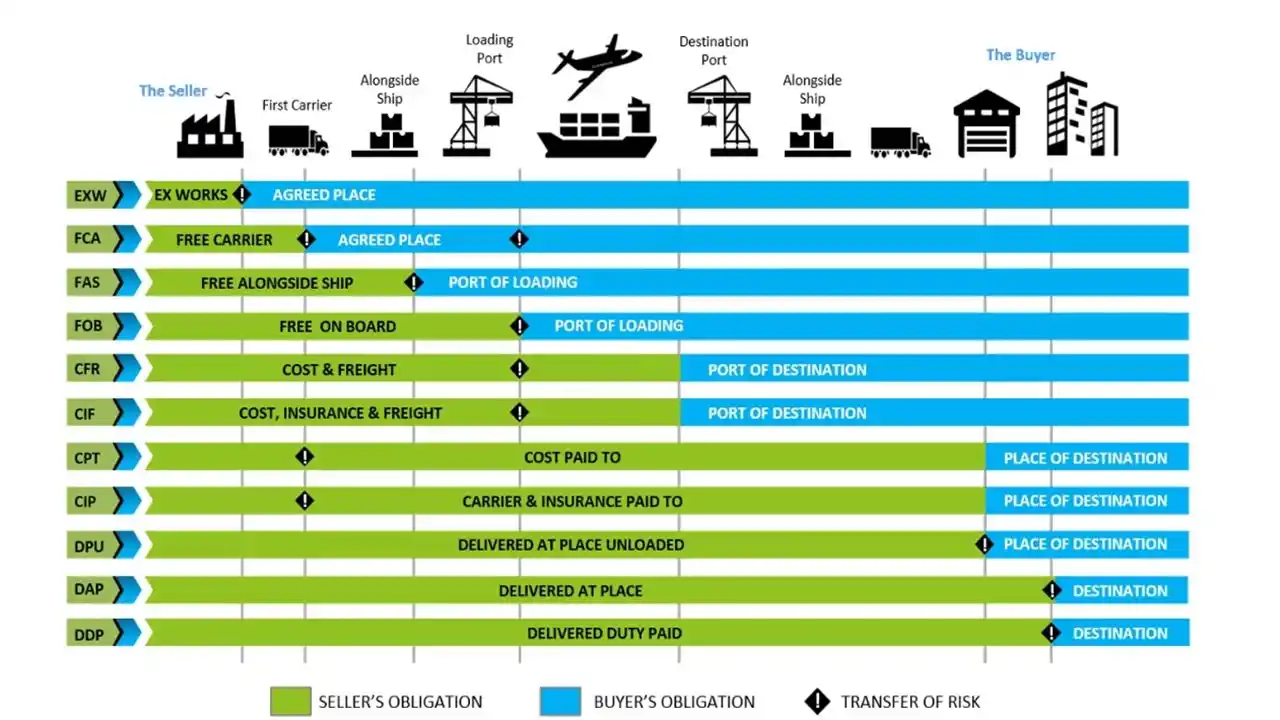
EXW (Ex Works) – The “Come and Get It” Option
This is as basic as it gets. The seller essentially says, “Your stuff is ready – come pick it up.” Everything else? That’s on you, the buyer. You handle loading, transport, export paperwork, insurance – the whole nine yards. It’s popular when buyers have their own shipping expertise or want complete control over the logistics chain.
FCA (Free Carrier) – The Flexible Choice
Here’s where things get interesting. The seller delivers your goods to a carrier you choose, but the details matter. If pickup happens at the seller’s place, they’ll load it for you. Somewhere else? You’re handling the unloading. The International Chamber of Commerce updated FCA in 2020 to make it even more flexible for container shipping.
CPT (Carriage Paid To) – Transport Included, Risk Not
The seller arranges and pays for shipping to your destination, but here’s the catch – risk transfers the moment they hand over the goods to the first carrier. So while they’re covering the freight bill, you’re sweating about what happens if something goes wrong during transit.
CIP (Carriage and Insurance Paid To) – CPT’s Safety-Conscious Sibling
Same as CPT, but the seller also buys insurance covering at least 110% of your contract value. It’s not comprehensive coverage, but it’s something. Smart buyers often purchase additional insurance on top of this minimum requirement.
DAP (Delivered at Place) – Almost Door-to-Door
The seller does the heavy lifting, getting your goods all the way to your specified destination. They handle transportation costs and risks until the goods arrive, ready for unloading. You just need to handle import clearance and actually getting the stuff off the truck.
DPU (Delivered at Place Unloaded) – The Full Service Option
This is the only Incoterm where the seller actually unloads your goods. Previously called DAT (Delivered at Terminal), it now applies to any location, not just terminals. Perfect when you don’t have unloading capabilities at your end.
DDP (Delivered Duty Paid) – The “White Glove” Service
Maximum service, maximum responsibility for the seller. They deliver to your door with all duties paid and import formalities completed. It’s expensive for sellers, but buyers love the simplicity. According to trade finance experts, this term works best when sellers have established operations in the buyer’s country.
FAS (Free Alongside Ship) – For the Heavy Stuff
The seller gets your cargo to the dock, right next to the ship. From there, you’re in charge of loading and everything that follows. This term sees a lot of use with heavy machinery or bulk cargo requiring specialized loading equipment.
FOB (Free on Board) – The Classic (and Most Misunderstood)
Probably the most famous Incoterm, but also the most misused. The seller loads your goods onto the ship, and risk transfers right then and there – not when the ship arrives at destination. Many people think FOB means the seller is responsible until delivery, but that’s not how it works.
CFR (Cost and Freight) – Transport Paid, Risk Transferred Early
Similar to FOB, but the seller also covers ocean freight to your destination port. However, risk still transfers when goods are loaded on the ship. So if something happens during the voyage, that’s on you – even though the seller paid for the transport.
CIF (Cost, Insurance and Freight) – The Maritime Package Deal
Like CFR, but with basic marine insurance included. The International Trade Administration notes that many buyers mistakenly think CIF provides comprehensive coverage, but it’s really just minimum protection. You’ll likely want additional insurance.
How to Pick the Right Term for Your Deal
Choosing the right Incoterm isn’t just about cost – though that matters too. Here’s what I’ve learned from years of helping companies navigate these decisions:
Start with your experience level. New to international trade? Don’t jump into complex terms like DDP or EXW. Stick with middle-ground options like FCA or CIP until you build confidence.
Consider who has better logistics connections. If your supplier ships globally every day and you’re making your first international purchase, let them handle the transportation. If you’ve got great freight relationships, terms like EXW or FOB might save you money.
Think about control vs. convenience. More control means more responsibility. Some companies prefer handling their own logistics for better visibility and cost control. Others want suppliers to manage everything so they can focus on their core business.
Don’t forget about regulations. Some countries restrict certain Incoterms or have specific requirements that make particular terms more practical. The U.S. Commercial Service provides country-specific guidance on these requirements.
Common Mistakes That Cost Money
I’ve seen these mistakes repeatedly, and they’re all preventable:
Using maritime terms for air cargo – Don’t use FOB for air shipments. It creates confusion and might void your insurance. Use FCA instead.
Assuming CIF provides full coverage – It doesn’t. CIF insurance is basic coverage that might not even cover your actual losses. Always check what’s included.
Vague location descriptions – “FOB China” isn’t specific enough. You need “FOB Shanghai, China” or whatever the actual port is.
Mismatching terms with payment methods – Some Incoterms work better with letters of credit, others with wire transfers. Make sure your payment terms align with your shipping terms.
Common Mistakes That Cost Money
The key to success with Incoterms is consistency and clarity. Train your team on what each term means for your specific operations. Create checklists for different terms so nothing falls through the cracks.
Remember, Incoterms are just one piece of your contract puzzle. They work best when integrated with clear payment terms, quality specifications, and delivery schedules. The International Trade Centre offers excellent resources for developing comprehensive international trade procedures.
The Bottom Line
Mastering Incoterms takes time, but it’s worth the investment. These seemingly simple three-letter codes can make the difference between profitable international deals and costly disasters. Start with the basics, choose terms that match your capabilities, and don’t be afraid to ask for help when dealing with complex transactions.
International trade doesn’t have to be intimidating. With the right knowledge and careful attention to detail, you can navigate global markets confidently and profitably. The World Trade Organization’s trade statistics show that international trade continues growing – and understanding Incoterms is your ticket to participating successfully in this global marketplace.